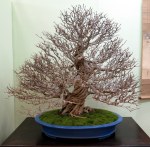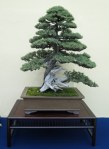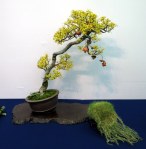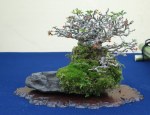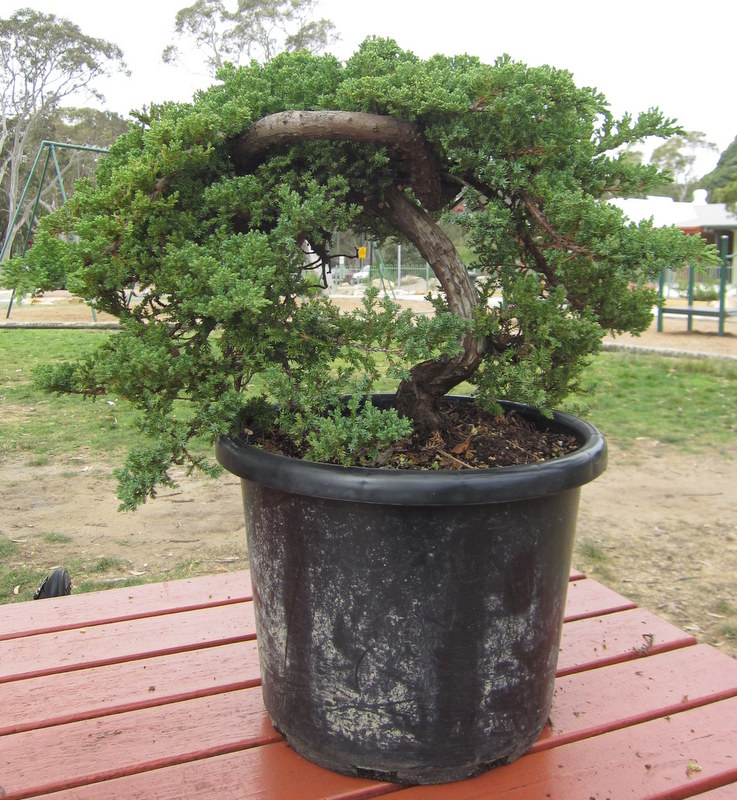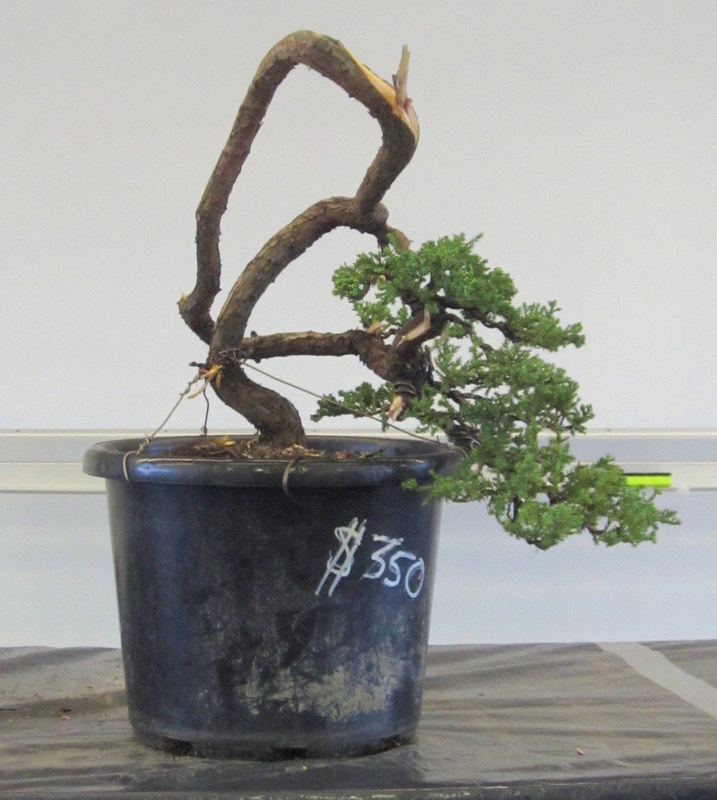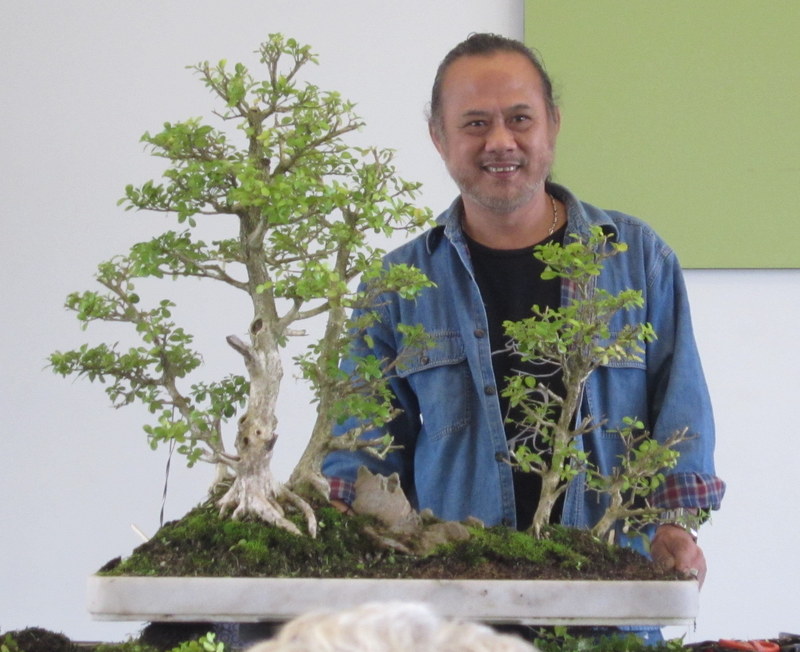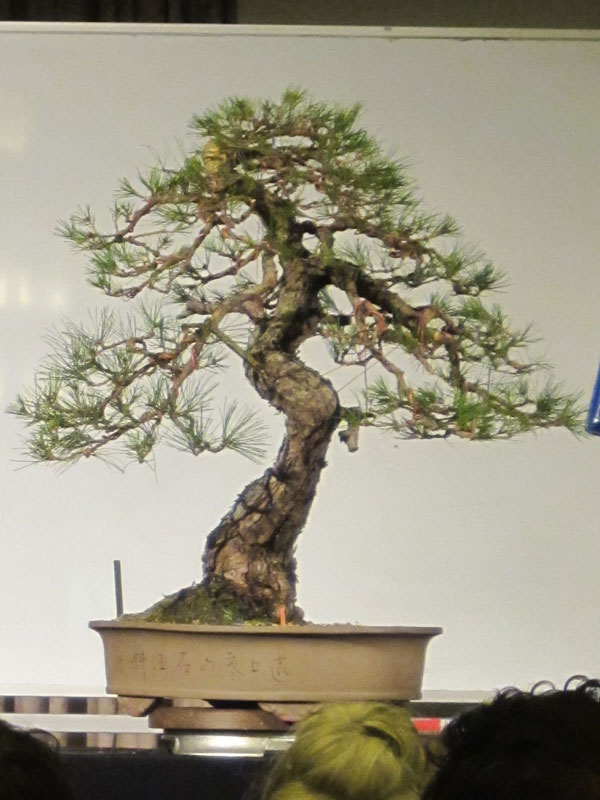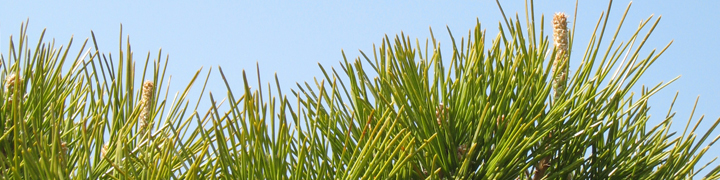
This year, Bonsai Northwest decided upon holding a winter exhibition. This is a bit of a rarity due to most Victorian shows being held in the spring or autumn. It was great to see many familiar trees out of leaf with the structure bear for all to see. I enjoy seeing trees that i have got to know over the years improve each time i see them come out for a show and this year was no exception.

Unfortunately the moody lighting didn’t translate very well into the photos I took with my cheap camera so I was only able to get a handful of non-blury shots which are below.

Enjoy.

I often hear people saying they wish they had access to good stock and or that they cant find any stock worth purchasing. Often the journey to find good stock can be difficult but there is definitely good stock available if you know where to look.

A couple of weekends ago I visited a friend on the outskirts of Melbourne to see how his ground grown stock had progressed this year.

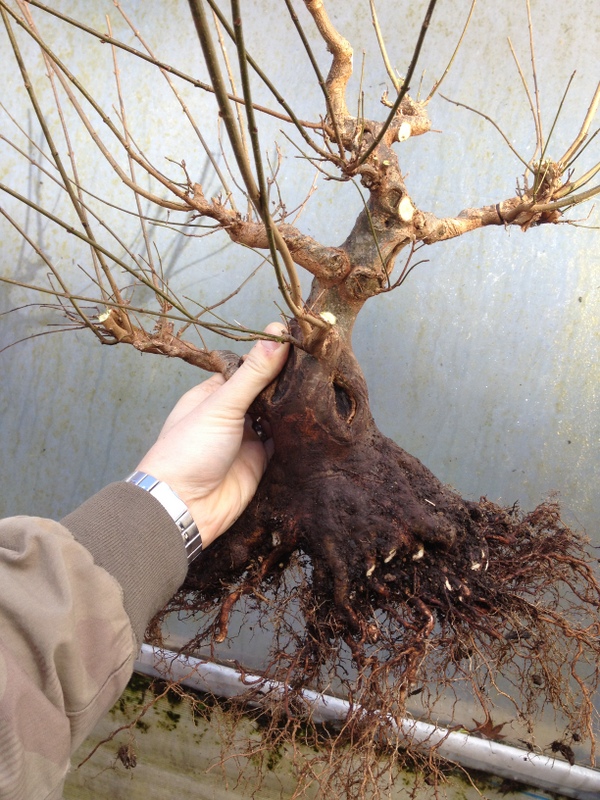
A trident slipped from the grow bed.

A trident slipped from the grow bed.

As you can see from the above picture, the stock was going very well indeed. There is no real secret about how to produce these results as they are a simple a matter of spending 10 years applying good technique and working the root bases each and every year.

Another great base.

Another great base.

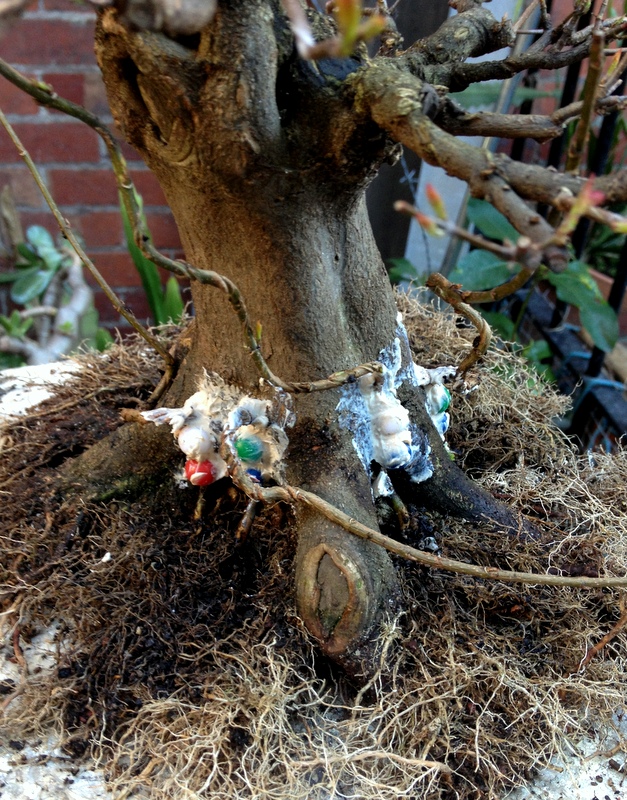
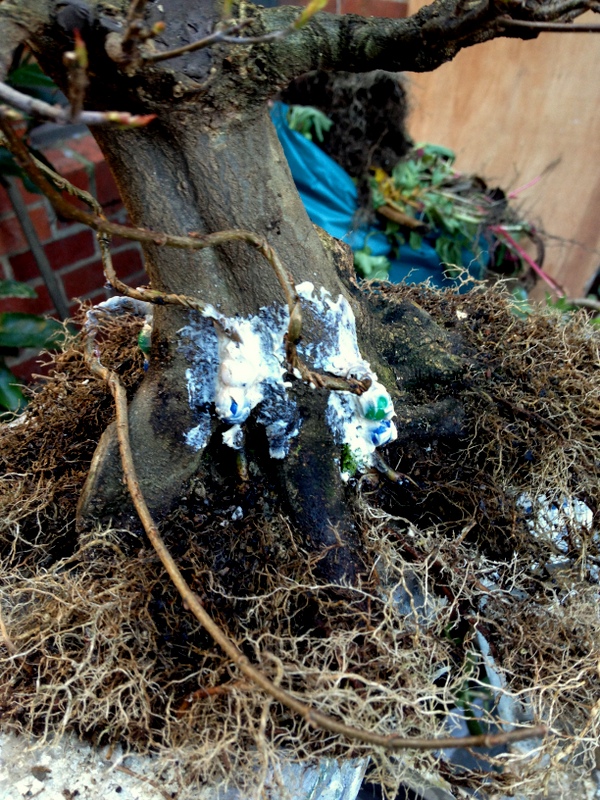
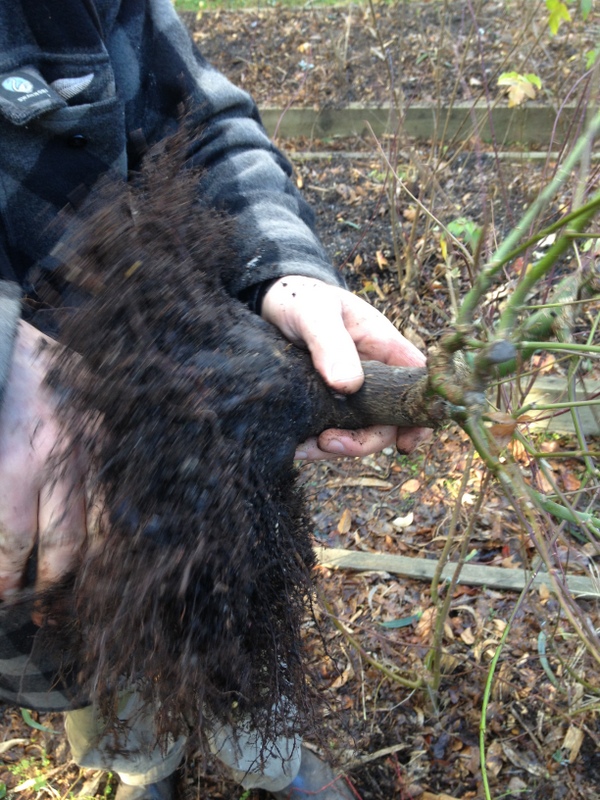
Each year the trees have been dug up and cut back hard to encourage a fine, flat root system. Digging each year coupled with the excellent growing conditions in the grow beds results in good yearly top growth without roots getting too thick and creating faults. This makes for trunks with great base flare and very small scars which in many cases are healed in the ground.
A Japanese maple from the same beds.

A Japanese maple from the same beds.

When out of the ground, the most important cuts to the roots are in removing those that are downward growing and scarring the base of the trunk to further thicken the base; and with this stock, this has been done with great results. In fact, I was so impressed with the quality of the material I put my name on a couple that might come out of the ground in the next couple of years.

The roots on the underside of the trunk being removed.

The roots on the underside of the trunk being removed.

For those not willing to spend 5 years working out the techniques and then a further 10 growing trunks luckily this grower also sells some of his stock.

His trident maples are available through Chojo Feature trees in Mount Evelyn.  Jeff who runs the place is an extremely nice guy and I am sure could help out those interested in a trunk and or other bonsai related products.

I have been trying to keep my collection from growing any larger with mixed success over the last few months. What makes it especially hard is when you help friends dig stock out of their growing rows at their nursery.

This years visit to Shibui Bonsai was much like last years in that a lot of nice stock was dug (which I am sure a lot will be featured in the coming seasons catalogue). Although a lot caught my eye, I was well-behaved and none of the ground grown stock came home. That is not to say I didn’t bring anything back to the benches…….

For a while now I have been meaning to grow some small twisted mini’s to use as accents in 3 point displays. On the benches at Shibui, Neil had a range of interesting little chinese elm root cuttings that I thought would be perfect for the project so I brought one home.

The cutting out of its original pot

The cutting out of its original pot

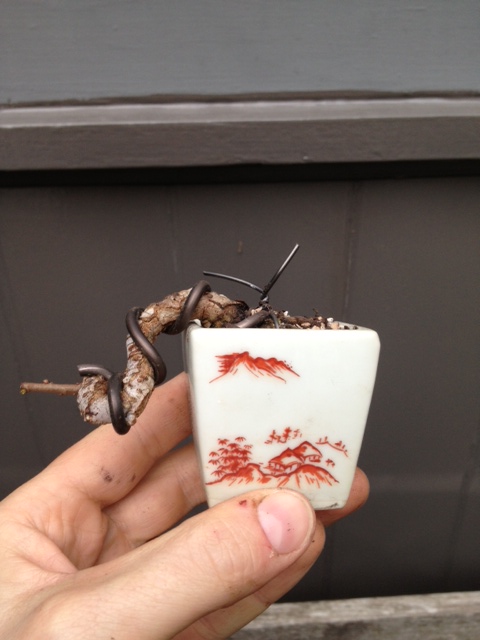
Today I wired the cutting to enhance some existing curves and then re-potted into a much smaller container in which I plan to start to grow a small crown from.

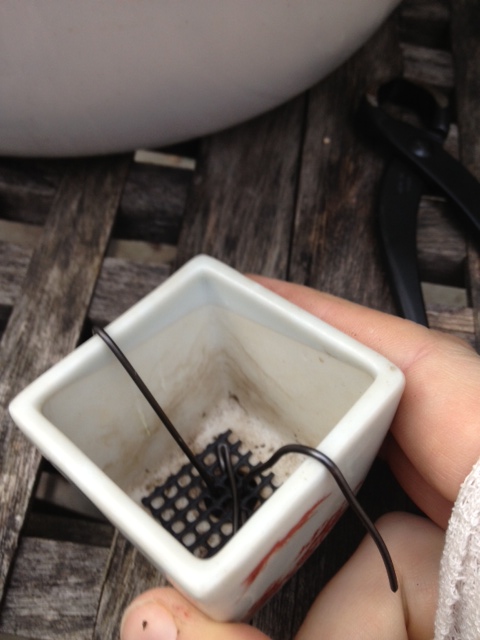
Often working out how to secure a small tree into a small pot which only has one drainage hole can be difficult but I have found the method shown below works well.

tie-in wire seccured to a larger wire.

tie-in wire secured to a larger wire.

Mesh installed and tie in wires ready to accept the tree.

Mesh installed and tie in wires ready to accept the tree.

The pot itself is by no means a museum piece but it is a well made Marufuji production pot. Being a little on the large side will serve it well to help the tree establish some new ramification. Once I am happy with how the ramification is progressing I will look for a more suitable pot anywhere up to half the size of the current container.

The roots were reduced accordingly.

The roots were reduced accordingly.

For such a small cutting the tree had grown a number of large roots all of which I removed and or shortened to fit into its new home.

Potted up but before i trimmed the tie in wires.

Potted up but before I trimmed the tie in wires.

After half an hours work the tree had found its new planting angle and its new pot. It is by no means a masterpiece but I think once I can develop some ramification it could make an interesting companion to a larger tree.

I think this little tree will make a nice addition to the collection in the coming years and being so small it shouldnt effect the space I have too much. In fact I probably have a whole lot of room for trees of this size.

Over the years while growing black pines I have always strived for more buds. Each year i tried to get back buds to form and most times I was successful although sometimes the tree I was working on would show signs of promise and then wave them in my face as it took them away again.

What am I talking about? I am sure you have all seen them; those small buds that form and give you hope, only to swell but never open, and then after a few seasons growth, wither and die.

A few of the buds in question.

A few of the buds in question.

As far as i can work out, these are needle buds and or weak adventitious buds that for what ever reason can never really get themselves into gear. Even after candle pruning the rest of the tree theses buds often still sit and do nothing. The most frustrating thing about these buds is they always seem to appear right where you want them which makes seeing them die all the more difficult.

I have tried a number of methods to awaken them but none have worked. I have had them in both shaded locations and spots where they get full sun, on bottom branches and in the apex, on strong growth and on weak. Nothing seemed to work no matter where they occurred or what I tried.

But there is still hope. At the convention a month ago Ryan Neil talked about these buds and passed on a technique I had not heard of before. He said these buds could be awakened by slightly damaging them with a scissor cut done at the same time you candle prune. That is to say that when you cut the candles, you also make a small incision into these sleeping buds. He said it was this damage that would trigger these buds to put out a flush of growth at the same time as the cut candles re-grow their second flush.

As we in winter at the moment I have not yet had the chance to try this method out, but I look forward to trying it this coming summer. Hopefully it is the answer to this annoying sleeping bud issue.


At the recent Australian Association of bonsai Clubs (AABC) convention in Canberra I was lucky enough to see Ryan Neil both demonstrate and conduct work shops over the course of three days.

Ryan works on a juniper.

Ryan works on a juniper.

For those that didn’t make the convention, you really missed out. We are very lucky in Australia in that we have a large number of foreign demonstrators and teachers visit. In fact, during a conversation at the convention we counted 5 foreign bonsai demonstrators alone this year who were coming over the pond to share their bonsai skills and passion.

What set Ryan apart from most other demonstrators I had seen was the clear way in which he explained concepts. All the demonstrators on the world circuit are capable of creating good trees, but very few of them are as excellent at communicating their ideas and methods. Ryan was excellent at this as well as his obvious skill in bonsai itself. In fact he talked non-stop throughout his presentations and demonstrations while moving between the tree he was styling and a white board, where he would draw diagrams to further make clear concepts.

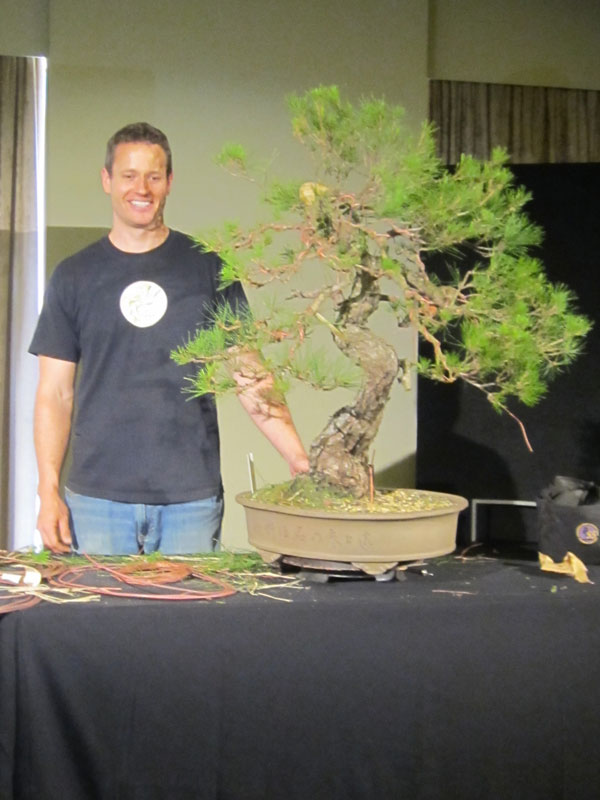
Ryan and a red pine from the National Bonsai and Penjing collection.

Ryan and a red pine from the National Bonsai and Penjing collection.

Ryan’s skills obviously did not stop at presenting, he had a confident and logical approach to styling, wiring and bonsai health that he was also able to convey both through his work and interacting with the audience.

He worked on 3 trees over the course of two days which my camera only really captured the final image of one well. He styled a Juniper, a scotts pine and an old red pine from the national bonsai and Penjing collection.

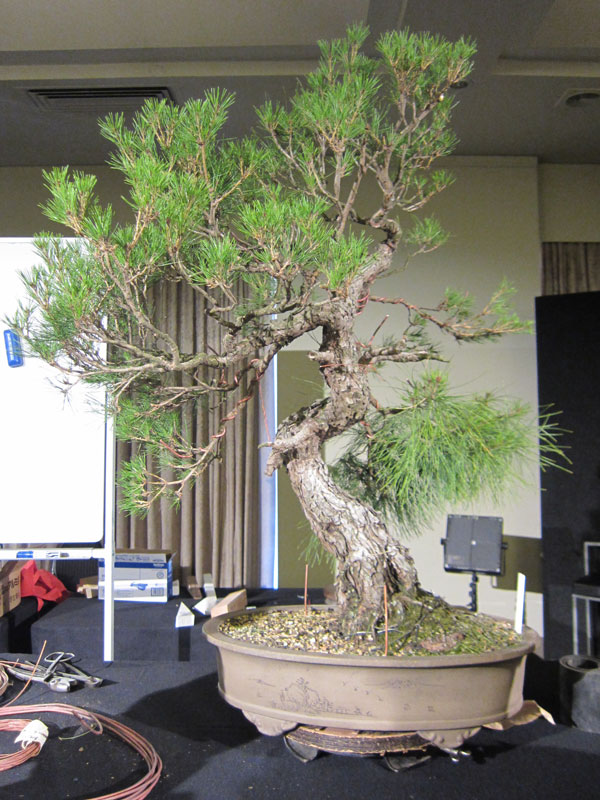
The red pine after some structural wiring.

The red pine after some structural wiring.

I think it would be safe to say that every one in the crowd learned a lot and thoroughly enjoyed the weekend. Ryan has certainly left Australia wanting more and hopefully we will see him return at some stage in the future. Perhaps he can revisit this red pine once it has seen some further refinement in his absence.

The finished Red pine demo tree.

The finished Red pine demo tree.

The results obviously speak for themselves. Ryan put on a great show and openly shared his knowledge over the course of the 3 days. For any one that has the chance to see him or learn under him I would suggest you take up that chance, I certainly will again should I get the opportunity.

This weekend past I was lucky enough to see Ryan Neil at the AABC national convention in Canberra. This is a national convention that is held in a different city around Australia each year. The exhibition is one of the key components of the convention and I look forward to seeing what each city has to display each year. Unfortunately my camera didn’t deal well with the low light in the exhibition so only a few pictures were in focus and those are in the gallery below. Enjoy.

As the season rolls on I am slowly getting to the end of my needle work which in turn will mark the time to begin preparing the deciduous trees for winter.

The tree below is another that has been slowly developing over the years and with another wiring and another years candle pruning I think it will be close to exhibit-able.

The tree has appeared on the blog before HERE where you can see the progress it has made and the ramification it has gained. It also makes obvious just how much it needs a re-wire.

Before the work

Before the work

After a the needle plucking.

After a the needle plucking.

Yet another of my trees that desperately needs a re-wire, it will have to get into line behind all the others that I plan on doing this winter.

This weekend gone by I got some time to do some needle work on a few more trees. One of which has featured on this blog before. It’s a bit of a strange tree and people either like it, or want to cut off the first branch. I like the first branch and as a result i haven’t cut it off just yet and actually now the tree is filling in a little bit more I am beginning to like it more than I did at first.

Looking a little shaggy

Looking a little shaggy

Probably the part of blogging I am enjoying the most is how it has forced me to catalogue my trees as they progress.  If you look at this tree 2 years ago HERE you can see that the tree has really improved over that short time. Looking at it day to day on the benches it is easy to lose perspective and feel like the tree is not progressing. It is only when you see a picture from a year or two ago that you realise just how much it has changed.

Needles removed revealing nice, new, short growth.

Needles removed revealing nice, new, short growth.

I am very happy with the progress I have achieved with it over the last couple of years and hopefully if I can keep this momentum up for a few more the tree will be well on the way to being exhibit-able.

I doubt if this tree is ever going to be everyone’s cup of tea but I think that it is now on a path where it will grow into a convincing image.


Its been a good year for growth in my garden which is always a bit of a double edged sword. A good seasons growth means that all your trees will have progressed and built further to their structure, ramification etc. but with lots of growth comes lots of maintenance.

With my pines this work takes longer and longer times. As the trees ramify the number of shoots double each year in turn doubling the time it takes to maintain them. As trees become more dense fingers can no longer reach areas of the branching so tweezers are employed which again can slow things down a little.

Here in Australia we are beginning to slip into autumn and it is time to shoot prune the second flush of growth and do needle work on the pine’s remaining growth.

The first tree off the bench was THIS little black pine.

Before the work.

Before the work.

Finally it is beginning to look like it belongs in a bonsai pot. you can see in the before picture how nicely the needle length has come down compared to the long needles attached to candles that were not pruned in spring due to them being weak. These weak candles now have strong buds at their tips getting ready for next springs flush.

After removing old needles.

After removing old needles.

After a few hours work things begin to look a whole lot neater. The new length of the needles is much more suited to the trees size and over all the tree is beginning to look more in proportion.  Next step is a re-wire which I hope to complete some time this winter and then a re-pot into something a bit nicer.

Its been a busy start to the year and as a result the posts to this blog have been a little slow. Hopefully in the coming weeks I will get a bit more spare time and will be able to update more regularly.

One bonsai related thing I was able to attend was an exhibition that featured a work by Makoto Azuma. I am sure many of you have seen works by him already as they do pop up from time to time on various bonsai blogs and websites, but for those that don’t know of his work it may be worth having a look at his site linked above.

His work is interesting from a bonsai perspective because he creates botanical sculptures that challenge ideas of controlled growth, display and the interaction between nature and man. His works often utilise bonsai in various states, frozen, dissected and scientifically maintained.

In the case of the exhibition I visited he had created a sealed container that automated all phases of a plants growth, and in this case the plant happened to be a bonsai which in its self had been highly manipulated to create its form.

The contained bonsai

The contained bonsai

The container watered the bonsai, controlled the fertiliser, humidity, temperature, airflow and light that the bonsai received while also serving as a means of displaying the bonsai in what almost looks like a museums scientific glass specimen case.

Humidity and temperature monitor.

Humidity and temperature monitor.

Although the bonsai inside the case was not the best example of a black pine I have seen, what I did find interesting was the way that when a bonsai was displayed inside a container that made visible all the manipulations to growing conditions that modern practices use, it highlighted the stylistic manipulation that we as bonsai growers do and that the plant inside the box had received. It really got me thinking about what it is we do as bonsai artists.

So often the discussion about our art revolves around styling differences and the bonsai it-self. I tend to think that the display arrangement and or the environment in which it is displayed says as much about the overall composition as whether or not you subscribe to ‘natural’ or ‘cookie cutter’ schools.

The bonsai in a box.

The bonsai in a box.

It is interesting that when you see this exhibit that the bonsai takes somewhat of a back seat in the overall composition and the object as a whole (glass case, bonsai and gallery room) all work together to present what was to me a new way of looking at the art we do.

Will you see similar displays at your local show any time soon? Probably not. But it does raise interesting questions about how we present our trees and in turn what stories those presentations tell. What can our bonsai represent? What does combining our trees with other objects say?  Perhaps it is time to start thinking outside the box in terms of what it is we wish to convey to the viewer when we exhibit out bonsai and try something outlandish from time to time.  If you look at contemporary art, the space and arrangement of the art objects is as important as the objects themselves and perhaps it is this aspect that we as bonsai artists struggle with.

I recently visited MONA in Tasmania and came across a room full of tribal masks. Each mask was lit by spot light which alternated from one to another in an otherwise dark room. After flicking through several masks the light stopped on a Picasso portrait. It was this juxtaposition between the masks and the portrait that hinted at where the Picasso painting had possibly taken its inspiration from. It had combined many works that individually were all impressive in their own right into a collection of works that once combined told the viewer more that what the individual works could tell on their own. An interesting concept when thinking about bonsai display.

For those wishing to see it ‘in the bark’ the exhibition is on until the 20th of this month at ‘Broached East‘ gallery Level 7 388 Bourke Street, Melbourne, Australia. If your in the area I think it is well worth a visit.

Some more info about the show is HERE


Enter your email address to subscribe to this blog and receive notifications of new posts by email.

Join 689 other subscribers

Contact me

nichigobonsai***gmail.com

Note: to use email address, substitute *** with @