You are currently browsing the tag archive for the ‘Australia Bonsai’ tag.
Prior to the recent AABC convention, I was asked to style an established Japanese white pine that had reached a stage where it needed some work to get it back on track.
It had been worked on a number of years ago during a workshop held by Hirotoshi Saito where the second trunk was bent upwards from what was a heavy first branch. Since then the tree has grown out with the occasional branch guyed down from time to time and with some trimming to keep the growth somewhat compact. What the tree was desperately needing was a full wiring and styling.

As the tree arrived in my garden.
I cut a good amount of branches off and had to do some heavy bending to move the apex from leaning towards the back to leaning forward. Most of the work was sorting out branch structure and setting basic branch positions to prevent thickening in areas that you might not want it in the future and providing structure for the tree to grow into.

Some of the removed branches.

After a couple of days wiring.
The tree will really benefit from a couple of years growth to fill out some areas such as the apex, but it now has a solid base structure to build upon further in the future.
The graft in this trees case is quite noticeable at the moment but I think that once the white pines park begins to crackle it should start to blend in much more. How long will that take? Who knows. I think 10 years would start to see the process beginning.
You don’t see many White pines in Australia and particularly of this size. It will be a good tree to keep an eye on as it progresses in the coming years.
While I am going through my photos from the convention I thought I might share a few of the bonsai that were on display. The below pics are only a selection of the trees that were on display as I didn’t have the time I thought I might to take photos of the full exhibition. Enjoy.
-

- Chinese Elm
-
- Chinese Elm
-
- English Elm
-

- Banksia
-

- Radiata Pine, Trident Maple
-

- Plum
-

- Radiata Pines
-
- Calistamon
-
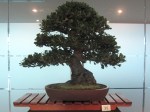
- Banksia
-

- Washington Thorn??
-

- Juniper
-

- Chinese Elm
-

- Trident Maples
-

- Olive
-

- Cedars?
-
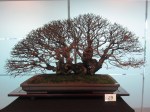
- English Elm
-

- Japanese Black Pine
-
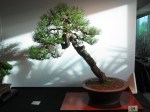
- Maritime Pine
-

- Chinese Elm, Trident Maple
-
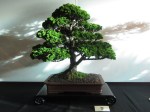
- Shimpaku
-

- Radiata Pine
-

- Alder??
-

- Radiata Pine
-
- Chinese Elm
-

- Needle Juniper
-

- English Elm
It has been a busy couple of weeks. Autumn has begun and with it a range of seasonal tasks. I have been madly plucking Japanese black and Red pine needles. Here in Melbourne we have a convention coming up for which I have to prepare a few trees so I tried to get my needle work out of the way early on.
It took a long time this year. What hadn’t really dawned on me until now was that needle pruning takes more and more time each year. Now this is not a bad thing, its more a by-product of a successful technique. As ramification increases, so does the amount of needles you have to remove. Where last year I was removing needles from one candle there are now two candles at that location that need needles removed from them. Not only are there more needles to pluck, but also the space you have to pluck them in becomes more and more cramped forcing you to use tweezers to negotiate the cramped conditions.
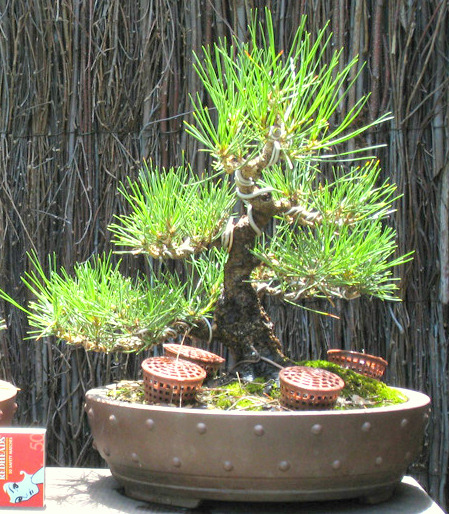
2008

2009

2012

2012 after needle plucking.
The above tree has wholly been grown in Australia and has come great leaps and bounds since I learnt how to properly care for it during my first trip to Japan. It is becoming a nice little tree although it is not perfect and it bears the marks of many of my early mistakes. That being said it has taught me a lot and although I have though about selling it on a couple of occasions I think now I would find it a little hard to part with. After all I have invested a huge amount of time into it.
Perhaps this is something to keep in mind when deciding on how large your collection should grow. How much time do you have, and will this time be enough to maintain your trees to a high level? Bearing in mind that as your trees improve and refine, in turn their maintenance times increase. I really enjoy growing pines but I am very aware of the time I have to spend on them each year. Needle plucking, pruning, wiring and candle work all add up. On a tree that is starting to get refined I am guessing I would be sending 6-10 hours on each of them over the year. When you add up all the pines you grow and then the time you spend on them, combined with the tasks you have for all other species you grow you begin to realise that there is a limit to how many trees you can look after to a high level. I lean towards keeping a smaller collection that is well maintained rather than a larger collection that doesn’t get the attention it deserves. That said it is hard to turn down a good tree.
Amongst the display trees that I saw at collectors corner (which can be seen HERE and HERE) I noticed that a large percentage of the display trees were Pinus Radiata. In fact the first tree that greets you once you enter the nursery is a big old Radiata.
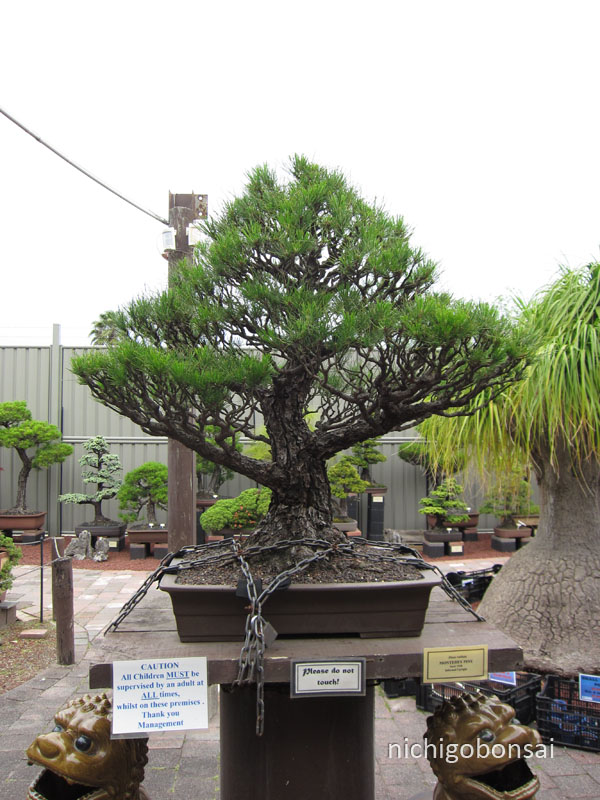
The welcome tree
This tree has been in possession of the nursery for a number of years and has always been an impressive bonsai. So impressive it seems it needs to be chained down!

Old bark
The old bark that the tree exhibits is beautiful and the crackled plates of bark seem in a good scale with the rest of the bonsai.
Now why does this tree have a post of its own? Well I thought that this bonsai was a good example of some of the problems that these old radiatas face. From a distance the tree seems to be full of foliage but upon closer inspection a different story is told.

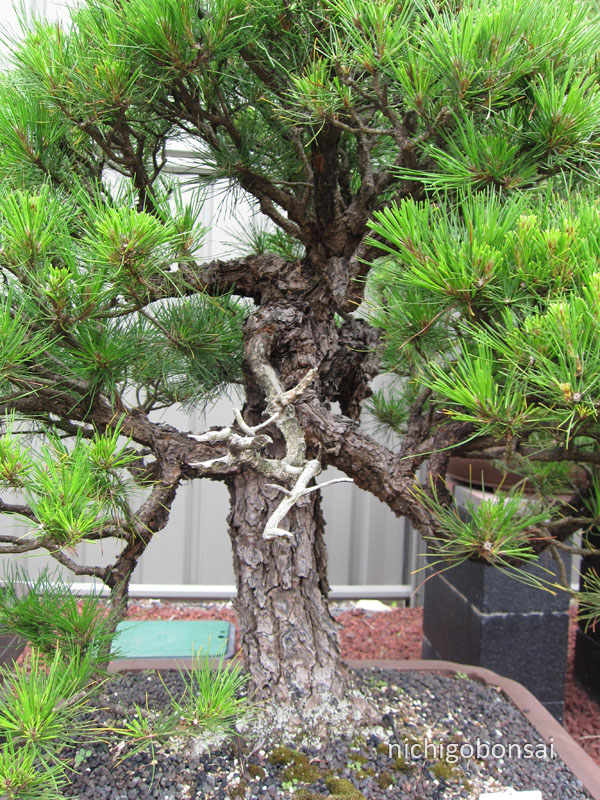
A main branch
As you can see from the above image the foliage is only on the tips of long leggy branches. This is a problem. The tree has no inner buds and no fine inner branches to cut back to. What this means is that the outline of the tree can never be reduced without the aid of grafting as at least from what i have found and the experiences of other local growers with the species, Radiata’s dont bud onto old wood well.
What does this mean for this tree? Well I think it needs a major re-working. It is always nice to project the future onto trees so I will have a quick go at making a list of the things I think needs doing short of feeding aggressively, watering etc.
- The branches have all grown upward. The first port of call would be to correct this by doing some heavy bending on each of the main branches, bending them down to just below horizontal.
- Wire all the sub branches and prune growth back where possible. This would have a two-fold effect. Bringing the foliage down would allow for light to get into the inner areas of the tree as well as taking the dominance out of the tips. A tip that is pointed upwards will always grow strongly from the tip. If it is horizontal it is more likely to bud along its length.
- Feed feed feed. If you are to hope of getting budding on old wood you will need a healthy, strongly growing bonsai.
- I would then look at grafting opportunities to start re-introducing growth into inner areas of the branch structure.
I think with a work routine something like the above the tree could be vastly improved. A nice tree as it is (Age tends to excuse many faults) but I think it could be better. If it were ever to come up for sale I am sure I could find room for it at my place.
After seeing this tree I began to think if these problems are some that I might be facing with my Radiatas in the future. Hopefully through regular styling I can avoid the upward branch problems but I am a little concerned about the lack of back budding. Hopefully one day I will unlock the key to this dilemma. Perhaps in this case it is a result of a thick canopy shading out inner growth?I think the above tree had just been heavily thinned as my memory of it in previous visits was of a much denser canopy.
Either way, in the mean time I will keep on experimenting with my trees and keep dreaming about other people’s trees that I would love to own. One such tree that caught my eye at the nursery was the pine below. Again another Radiata.

Interesting?
Interesting or ugly?
I keep finding myself being drawn to trees with problems. I think I enjoy both looking at these bonsai that challenge the rigid frameworks some people use and also love to work on them to try to use those awkward features to form a design that works in a classical sense.
The heart of the problem or the heart of the opportunity?
Again I think the age displayed by this tree excuses a lot of the faults and in a way the faults in branch placement almost add to the ancient feeling the tree exhibits. Would I change things? Most probably yes, but I would like to live with the tree for a long while first to get to know each of its quirks.
Again I think with some creative styling and a total wiring this could become a very interesting tree. Another I could easily make room for at home.
It is interesting to note that this tree also seems full of foliage from a far but on closer inspection it is actually quite leggy and bare on the interior. Now I am not sure if this is a result of age or whether this is due to too thick a canopy being kept that has shaded the interior, killing the inner shoots. Hopefully it was a lack of light and not just the result of the species growth habits. If it is just a lack of light I can rectify this on my own trees.
Well i hope you have enjoyed these trees as much as I did. I always like to see old radiatas. I like to look into them and see if they will give away any hints that may lead to a future technique or method for getting them to back bud on old wood. Perhaps I will never find it, but I will definitely enjoy looking for it.
On that note, does any one out there have old radiata or Monterey pines? How do you grow them? have they ended up leggy? I would love to hear from you. Please comment below or email me at the address on the left of my website.
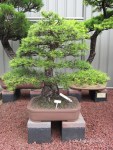

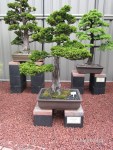

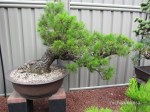


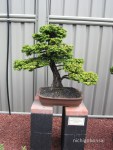
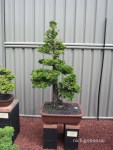
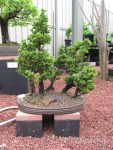


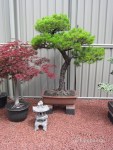


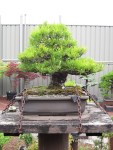
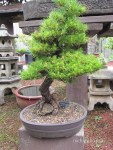
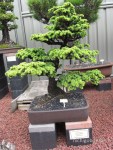
Recently I visited the newly renovated Melbourne nursery Collectors Corner. Collectors Corner maintains a moderately large collection of old display trees of a quality that are hard to find on public display else where in Melbourne. Many of the bonsai had been recently re-potted and were showing the results of this work with flushes of healthy spring growth.
I would love to get my hands on some of the display trees as i think with a couple of years refinement they could be very good bonsai.
The renovations are a great improvement on the old setup even though the overall size of the display seems to be a little smaller the bonsai are much easier to see and appreciate. Well worth a visit if you are in the area.
Some photos are below. I will upload a second lot in my next post.
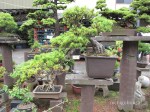
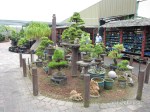

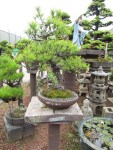
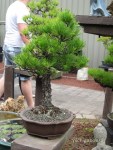


The following trident maple was ground grown by a friend. Since digging it up I have slowly been preparing it for its future life as bonsai.
One of the things I wanted to do this year was to set a first branch in an area where there was no branching. I used a rough version of approach grafting which I hope to explain below.
Now the method I am using is not as exacting as it could be. The reason for this is the species I am using (Trident Maple). Tridents are very fast growing and forgiving. They also fuse very quickly which is the trait I am hoping to take advantage of in this instance.

Making the cut.
Approach grafting is a fairly straight forward technique. I wrote about it in regards to conifers in two parts HERE and HERE. To approach graft conifers you have to be fairly exact when lining up the cambium layers. Using the below variation you can be a bit less exact if using thin barked deciduous trees.
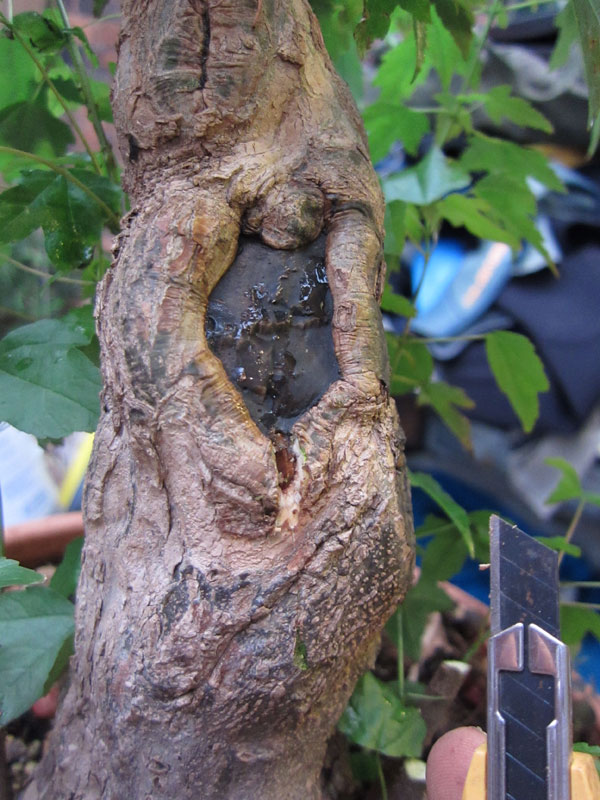
The finished cut.
Firstly you cut a channel roughly the width and depth of the whip you wish to graft.

The pinned whip.
You then insert the whip and secure it in place so that as it grows it is forced to grow into the cut channel, during which time it grows together with the trunk, fuses and makes the graft.
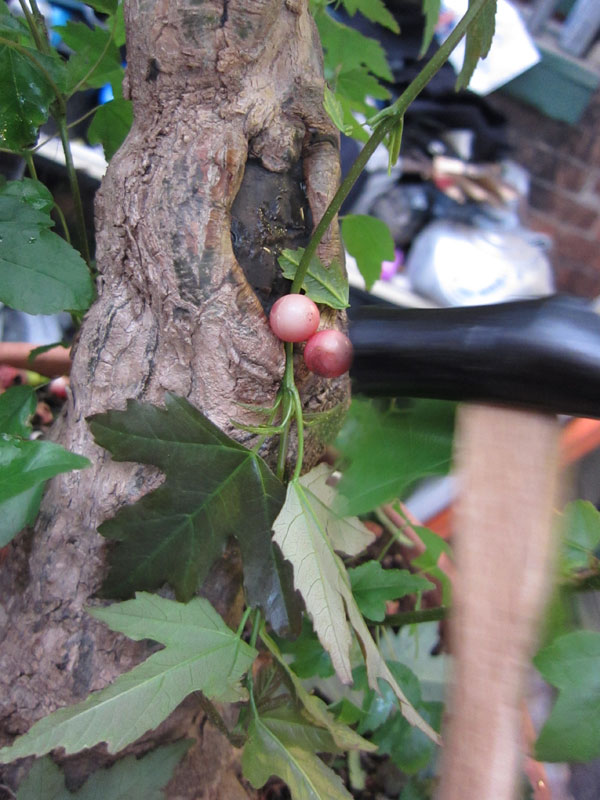
Hammer time.
In this example I used map pins to secure the graft. I find that the round surface of the pins heads does less damage to the growing and thickening whip than using square-headed pins or those with sharper edges.
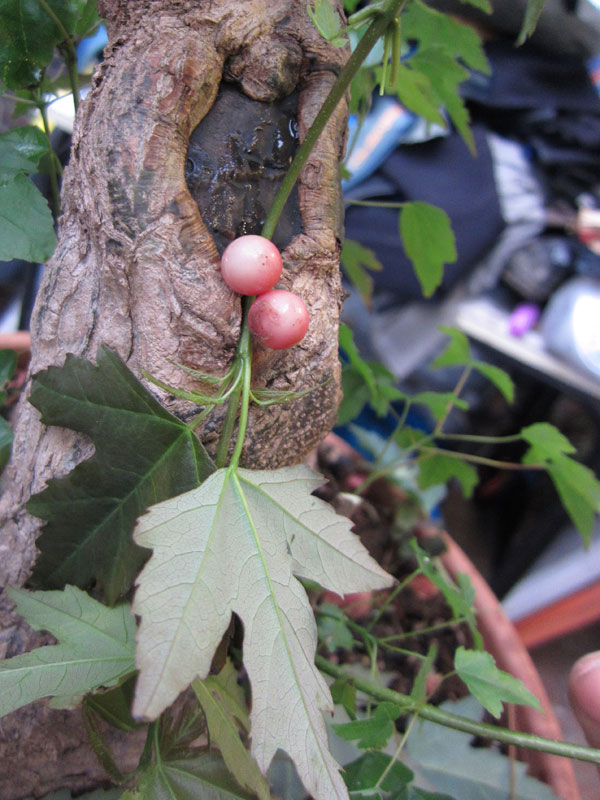
The second pin secured.
In this case two pins were used to secure the whip. As Trident maples grow quickly and have relatively thin bark the whip and cut channel should graft together in a relatively short time as they heal and thicken. What is good about this technique is you can use very young whips as you do not need to expose the cambium layer. By not having to expose the cambium layer you avoid having to expose a large percentage of the cambium in the form of a wound and therefore increase the chance of the whip surviving and growing strongly.

Sealed, wired and ready to grow.
After setting the graft I like to lightly wire the whip and direct the tip upwards to ensure it will grow both strongly and leave the graft site at a desired angle.
This graft will be left to grow for the season so it can thicken, fuse and graft itself onto the trunk. I will cut it off the parent whip once I can see a difference in thickness between either side of the graft site. As the graft begins to take it should start to draw sap from the trunk and become noticeably thicker from the graft site onwards.
After I finished placing the graft on the trident maple I decided it was also a good time to clean up a graft on a Chinese Quince from last season. If you look closely you can see the difference in thickness between the grafted branch and the stub that use to be connected to the parent whip.

A successful graft
You can just see the stub below the branch junction where the whip was cut once it had taken.

Stub removed.
I like to leave the stub on for a while until I see the graft growing strongly. I think keeping wounds away from the graft site at least until you are sure the graft is successful is a good idea.
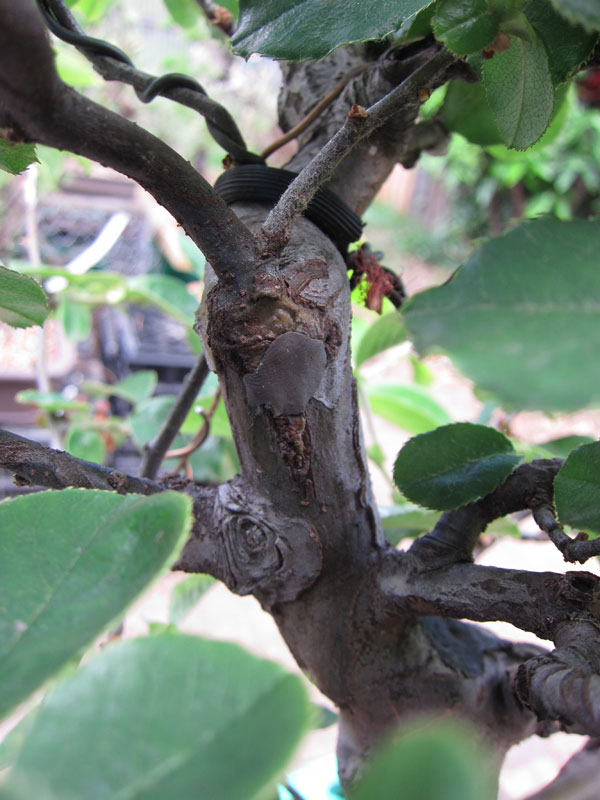
Sealed and finished.
To complete the process it is as simple as cleaning up the stub from where the whip was once attached and sealing the wound. Once the wounds heal and the graft grows for a season or two it will become increasingly difficult to tell that it was a grafted branch.
It is a very simple process all in all and one I use quite often. It can be used with a range of thin barked deciduous trees that show signs of fusing easily. It is an easy technique to do and most of the time returns great results. Some example species to try might be, Trident Maple, Japanese Maple, Chinese Quince, ficus species and other species with similar bark traits.
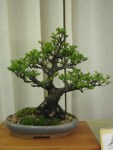
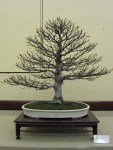
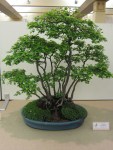
Just thought I would share a couple of pictures from a recent show. The show was put on by the Bonsai Society of Victoria and much like other years it was well worth attending. What I found interesting this year was that there were a number of groups on display. It seems that recently, groups have fallen a little out of favor so it was good to see some nice old examples represented.
Pictures of a couple of trees below.



I had some time this weekend to work on one of my pines. This time i chose to re-wire a small Japanese black pine (Pinus thunbergii).
The tree in question had belonged to a member of one of the clubs I belong to. When i received the tree it was estimated to be around 30 years old. It had been a nice little tree, but the last few years before I received the tree it had become leggy and some wire had also been left in the apex which had caused some large swelling and scarring. As a result, I had to prune most of the branches back quite hard and also remove the damaged section of the apex and upper trunk which essentially shortened the tree by a third.
The first wiring happened in March 2009.

One of the first wirings. Before and after, March 2009.
The little pine responded well to heavy feeding and was re-potted into a better mix. It budded back quite well and was ready for another light wiring by April of 2010.
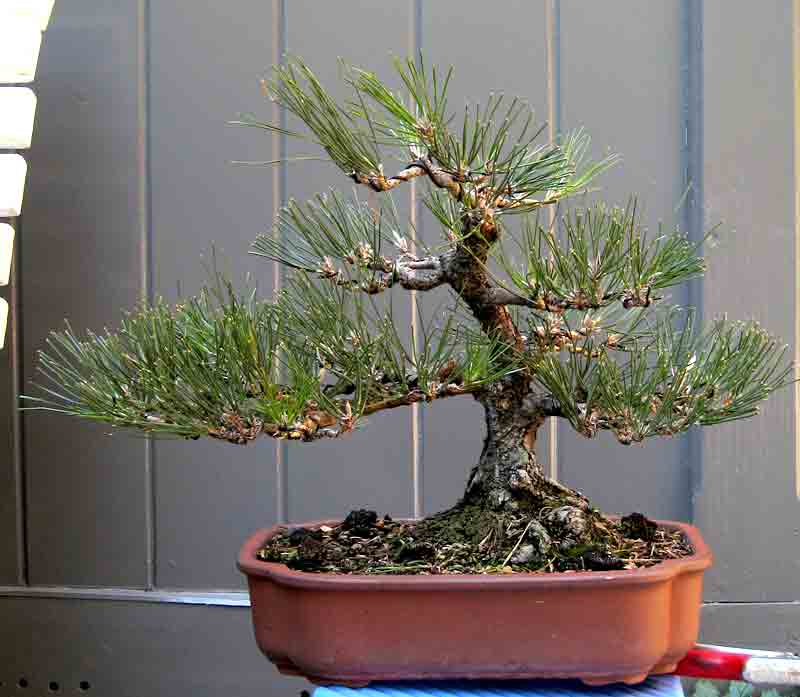
After wiring the tips out. April, 2010.
As you can see the apex still needs a lot of developement. After cutting the damaged upper trunk off in 2009, I had then had to re-build the apex from a single branch. It is a slow process to rebuild a crown but this little pine responded well and produced a number of buds where i needed them.

The tree slowly coming to shape. Pre-wire, first branch and then secondary branches wired.
Every year the ramification increases and I am able to remove problem branches and replace them with better growth. The apex has now taken shape and now needs to increase its ramification to fill out its silhouette.
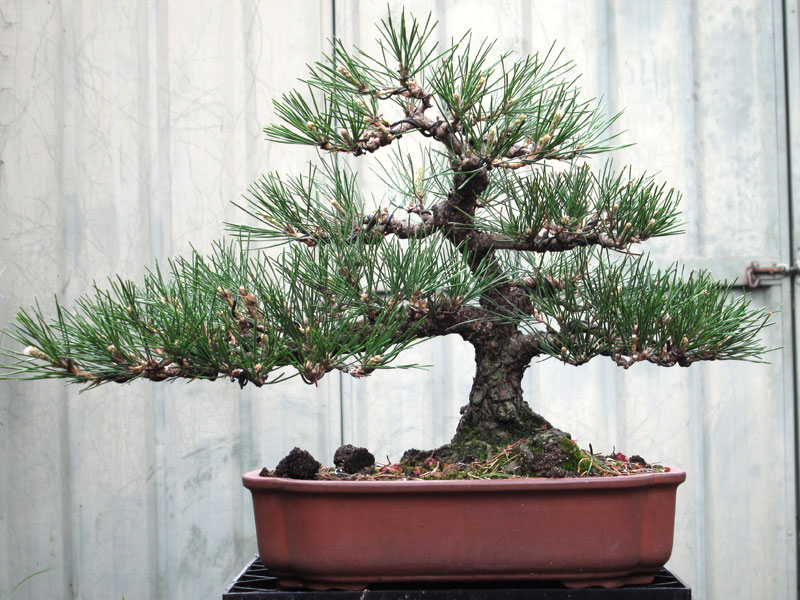
After the latest wiring.
Looking at the above picture the shape of the tree becomes clearer, but i think it still has a way to go. I like the long first branch, but am still toying up whether or not to break the foliage mass up into a couple of pads or keep it as a single mass. This years wiring was not the final wiring the tree will see and was done to achieve two things. The first was to start to set the form of the branches a little closer to how I imagine their final positions and also to let more light into the interiors of the structure. By letting more light into the interior I should be able to strengthen weak inner buds and also encourage further back budding.
I hope that in a couple more seasons I should be able to even out the foliage density and have the tree ready for show.
Just a few pics from around the garden. Spring has come early this year and nearly all my trees are starting to move. It’s an exciting time of year.

A trident begins to leaf out.

Flower buds swell on a flowering quince.

A Chinese quince almost fully in leaf.
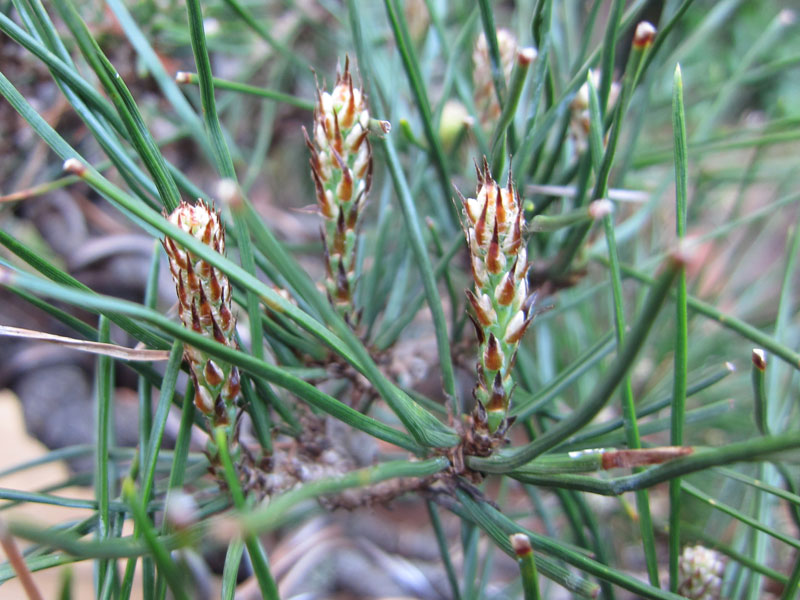
A shohin Red pine's candles begin to extend.

