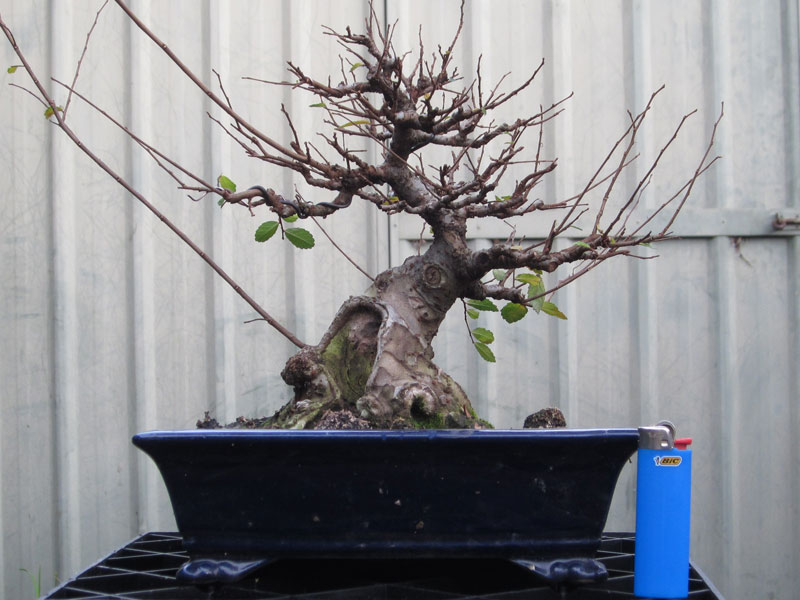
This year has seen some dramatic changes to my bonsai. The most major of these was moving house and gaining some backyard space. My trees previously were kept in amongst a lush garden. On one hand this was good in that my bonsai were quite sheltered and there was a good micro climate in which to grow amongst. The down side was that I could never really rid my trees of pests as once the garden was infected everything was. As a result my trees ended up with a number of pest problems. Now I have moved I hope to rid them of these problems, which brings me to the subject of this post, my Trident Maple.

Earlier this spring I defoliated the maple and posted the results HERE. I repeated this defoliation process twice more during the season and was rewarded with much increased ramification.

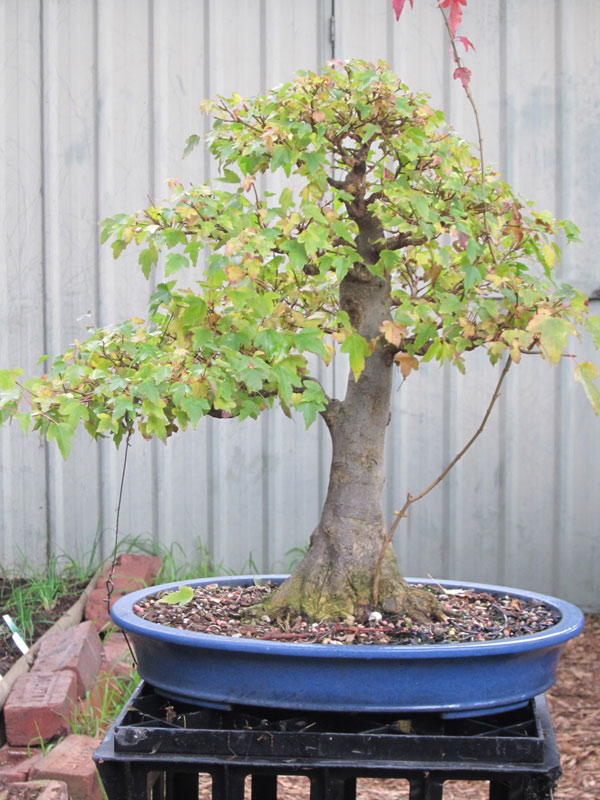
As it began to change into its Autumn colours I set about doing the final defoliation. Usually I would leave the leaves on a little longer in order to see the full range of colours they would turn but I wanted to remove them before they dropped so I could dispose of them along with any insect eggs that may have been laid on them.

The trident at the beginning of autumn just beginning to show signs of it changing colour.

Starting to turn

I removed all the leaves which revealed the structure of the branches and all the new ramification. All the leaves that were removed were put into the household garbage to ensure that any eggs on them would not end up anywhere near my bonsai.

Defoliated.

Once the tree was naked I was able to carefully look over the tree to assess the amount of pruning that would be required. I wanted to spray the tree with lime sulphur to kill any remaining pests so I did not prune at this stage. I don’t like the idea of lime sulphur getting into fresh cuts. I am not sure if it is actually a problem or not but I choose to avoid it where I can.

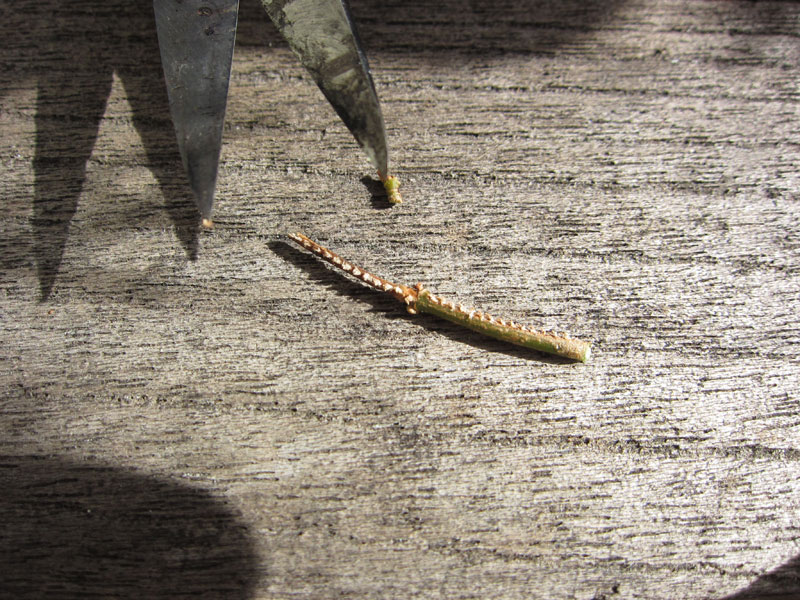
What I did prune off was some insect eggs. I found what I first thought were fungal blooms on dead twigs.

If you look closely you can see the small white tufts of damage.

A close up of a damaged twig

Upon further investigation I realised that the tufts lead to a hollow channel within the twig which was filled with eggs around 0.5mm in size. I did a quick search on the net and realised they were the eggs of Passion Hoppers which lay their eggs in channels they make within small twigs. The twigs die soon after the eggs are laid so cutting the twig off and destroying it is a good way to tackle them.

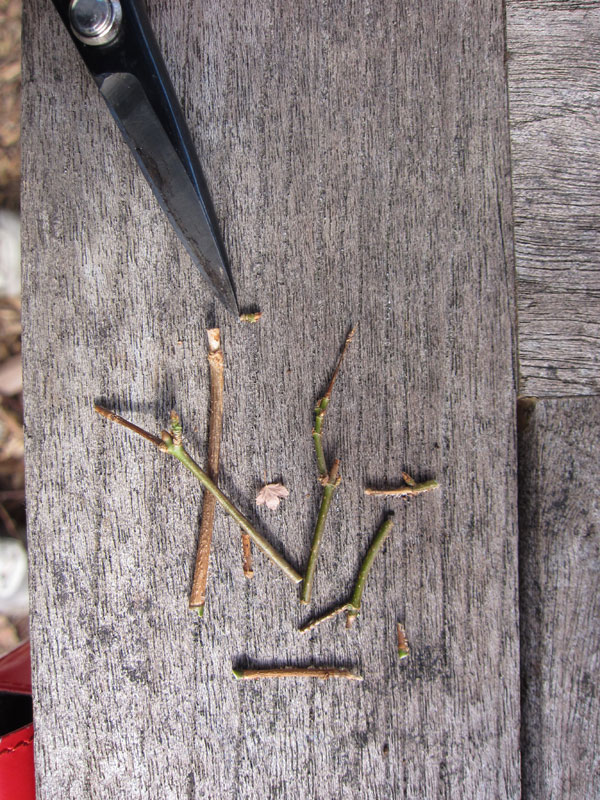
I then went over the tree with a pair of scissors and removed every twig I could find that exhibited signs of damage.

A pile of some of the damaged twigs.

After removing what I can only guess was hundreds of insect eggs I sprayed the tree with a diluted solution of lime sulphur to prepare the bonsai for winter.

It was a satisfying days work. I hope that the work will pay off next season with a dramatic reduction of insects in my collection. Fingers crossed.

During my recent trip to Japan i managed to visit Fuyo-en. Fuyo-en is a garden that always has a high number of quality bonsai. I was a little pine-ed out by this part of my trip so it was nice to spend some time with their amazing deciduous trees. I took a number of photos which can be found HERE.

What was also nice was to see some of the recent work that was going on around the garden.

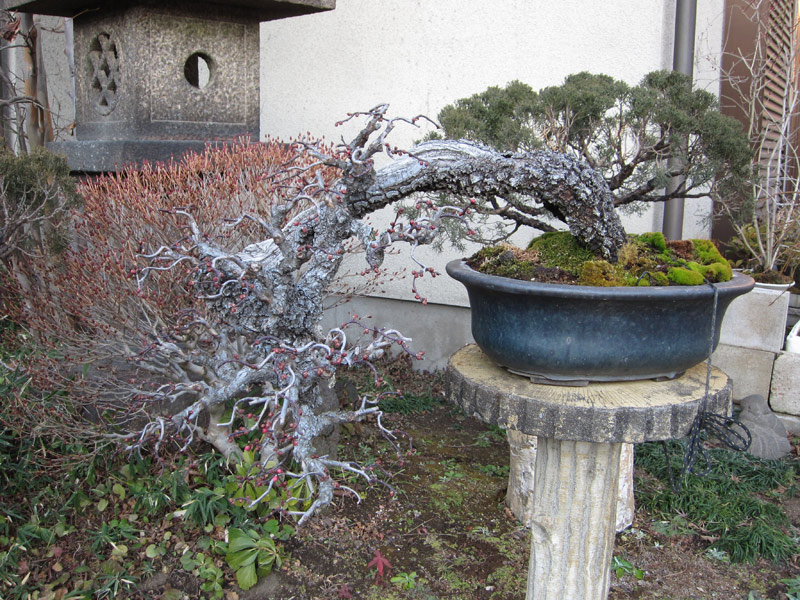
The frist bonsai i noticed of interest was what I am guessing was a flowering apricot. It had recently been grafted in a number of places. I have read that these trees often need to have young wood grafted into areas of older wood to maintain vigour and keep the bonsai compact.

The grafted bonsai.

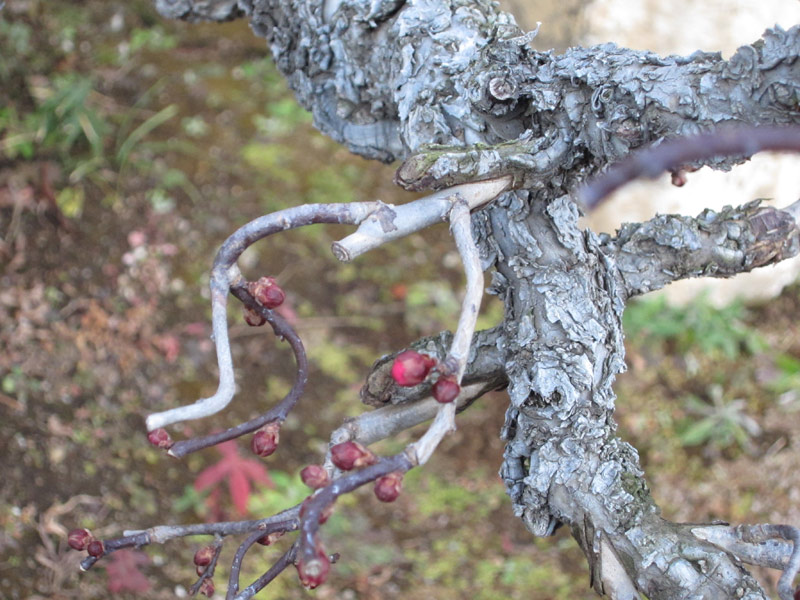
Although the grafts looked to not have completely healed nearly all of them were  producing flowers as can be seen below.

The grafting in detail.

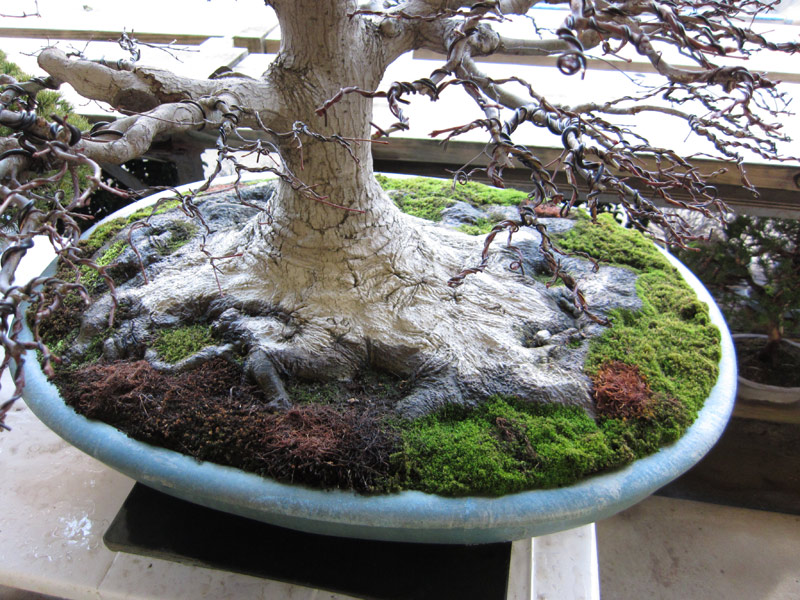
One of the other trees that caught my eye was a maple with an enormous nebari. The bonsai was being worked on by one of the apprentices who was wiring all the branches to the tips.

An impressive nebari

I always enjoy seeing techniques done by Japanese professionals. Even seemingly simple tasks can reveal tip and tricks when performed by someone who works at these high levels.

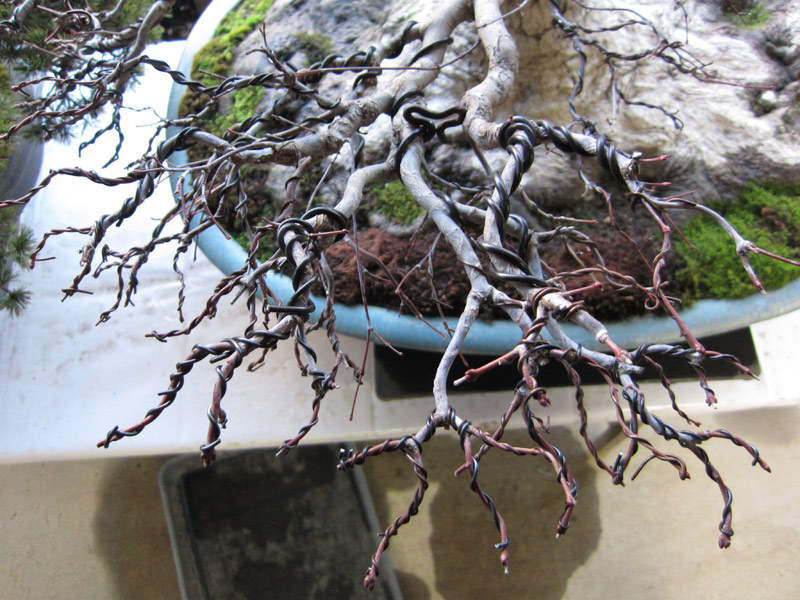
A freshly wired branch.

One such trick that can be learnt from the above image is the use of the little wire bracket. It has been used to gently spread two sub branches. Had this not been used, the two branches would have had to been wired with quite a large diameter wire to achieve the same spreading effect. Having avoided using a heavy gauge wire, the wire that is on the branch appears far less obtrusive than it could have. A small trick with large results.

I always look out for these little tricks when ever I am around other people’s bonsai, as I find there is always something to learn.

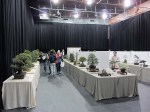
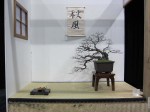
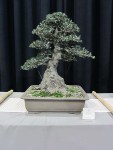
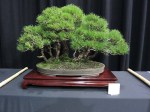
This last weekend I went down to Footscray and had a look at the Bonsai Northwest Inc.’s annual show. This year there had been a change in venue to the Footscray community arts centre which turned out to be a great success. The exhibition space was skirted in black curtains which provided a great backdrop for the trees.

Having been involved in the Victorian scene for a while now it is good to see that every year the quality of both trees and displays are on the rise.

All those who exhibited and worked on setting up the venue should be proud of their work, the exhibition looked fantastic. Hopefully this year is a sign of things to come in the future and also a hint of the quality we might expect at next years AABC convention which is being hosted by this club.

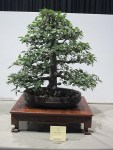
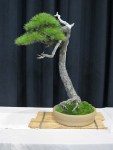
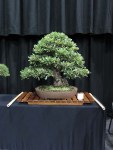
I did manage to get some photos but unfortunately my camera struggled with the lighting as it is a small point and shoot. Some of those pictures are below:

Even though my last trip to Japan’s purpose  was to get married, i still managed to find some to visit some bonsai nurseries.  The nursery below was a little out of the ordinary from your normal Japanese nursery.

For those familiar with the nurseries of Omiya and other well-known growers would be used to the high level of immaculately maintained and presented bonsai. I am sure many of you who have been to japan and experienced this for them selves would be aware of the overwhelming feeling you get when you are exposed to so many high quality trees in one place. These places are obviously the top end of the business. Their trees grace the many shows around Japan that exhibit these high level trees and in my opinion cement the Japanese at the top of the bonsai pile. But surely not all of Japan’s bonsai are show ready and of the best quality. Which brings me to this post.

The Kanuma garden centre (Click the image for a larger view)

My last trip I was taken to a place where there was no doubt, a huge range of bonsai. There were magnificent trees on display but, they were the minority. For the most part the bonsai for sale were project trees. Trees with problems in one way or another. Trees that would benefit from an air layer, a branch or two removed or a restyle. I spent a good amount of time here looking over the many benches, admiring potential. It was nice to be able to see trees that were waiting for the hobby grower with some vision to come along and place their mark upon them. I would love to live near a nursery such as this. On the surface it is not as impressive as the higher end nurseries but it is budding with potential for someone who likes to work on their own trees.

A small selection of photos are below.

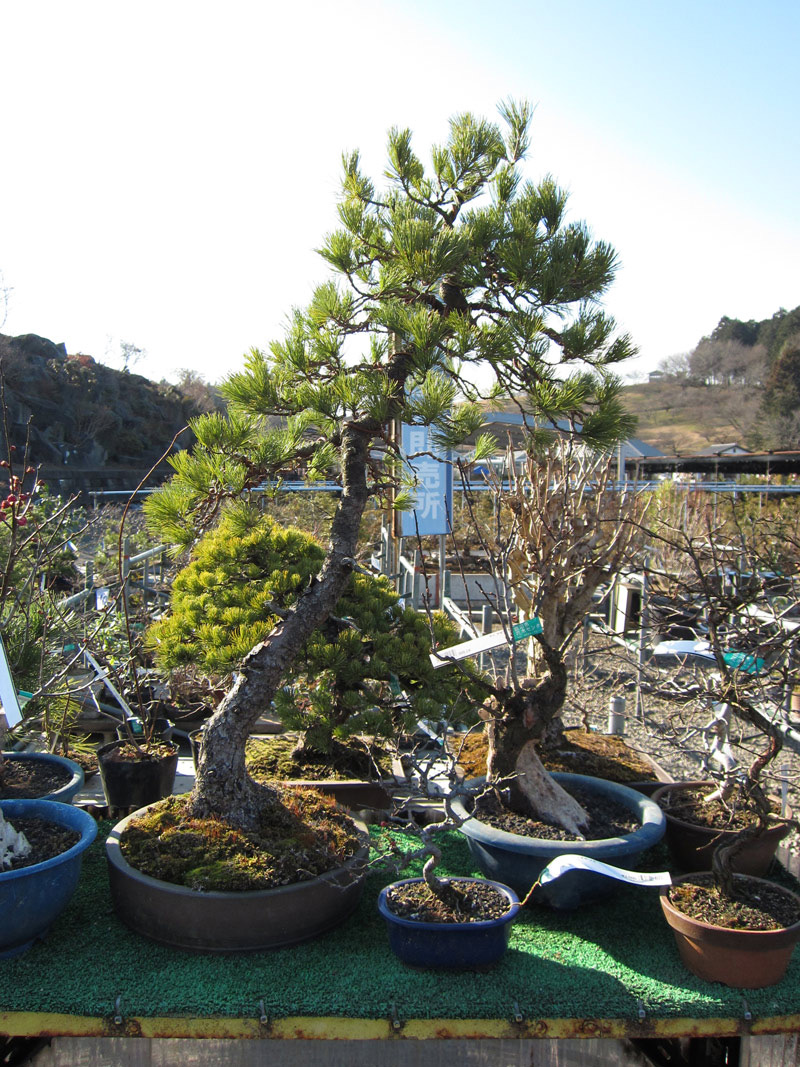
Some of the more developed pines.

One side of the benches. There is an equal number of benches to the left.

This seasons Satsuki dug and ready for sale.

A Satsuki on the benches

A pine in need of some refinement.

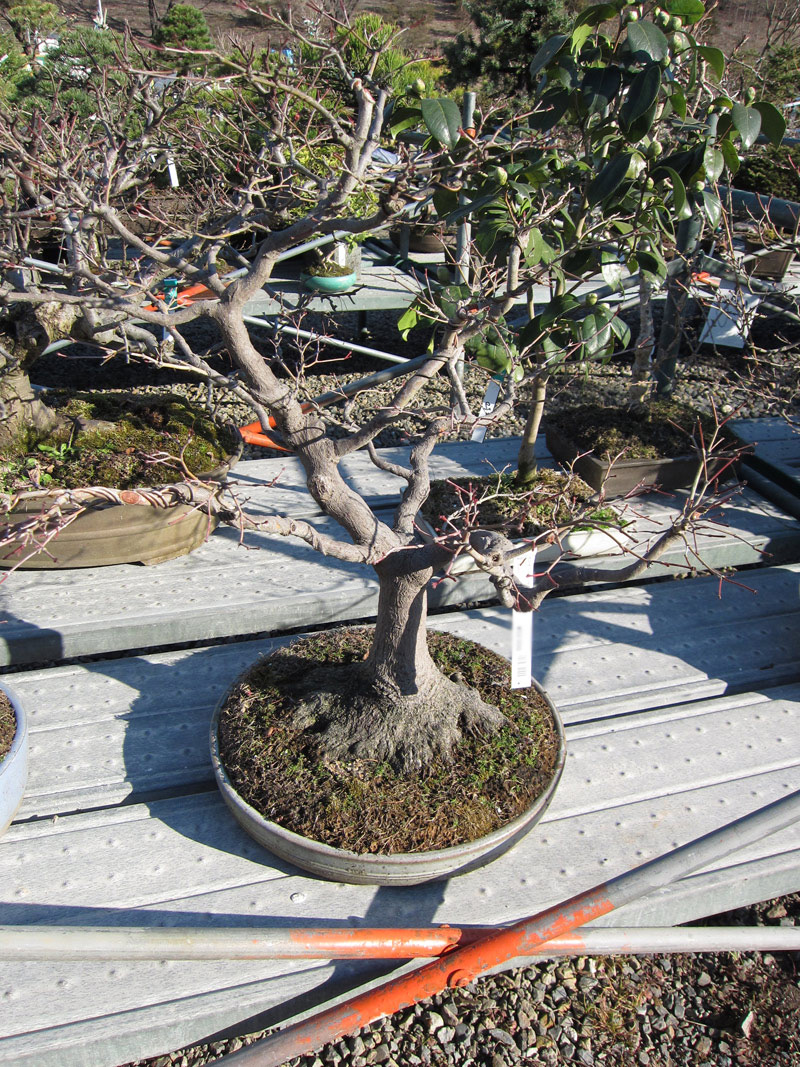
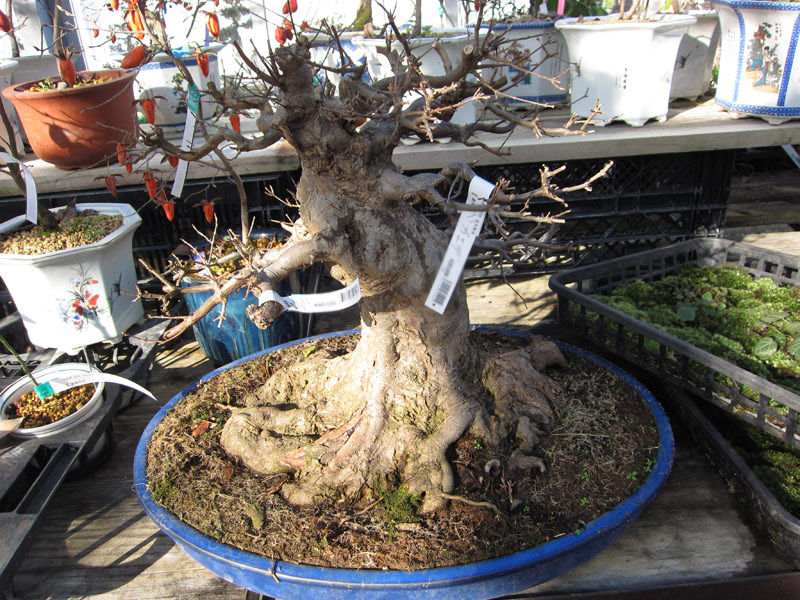
A maple with a nice base. Great beginnings for someone willing to do the branch work.

A trindent with a whole lot of problems i would love to inherit.

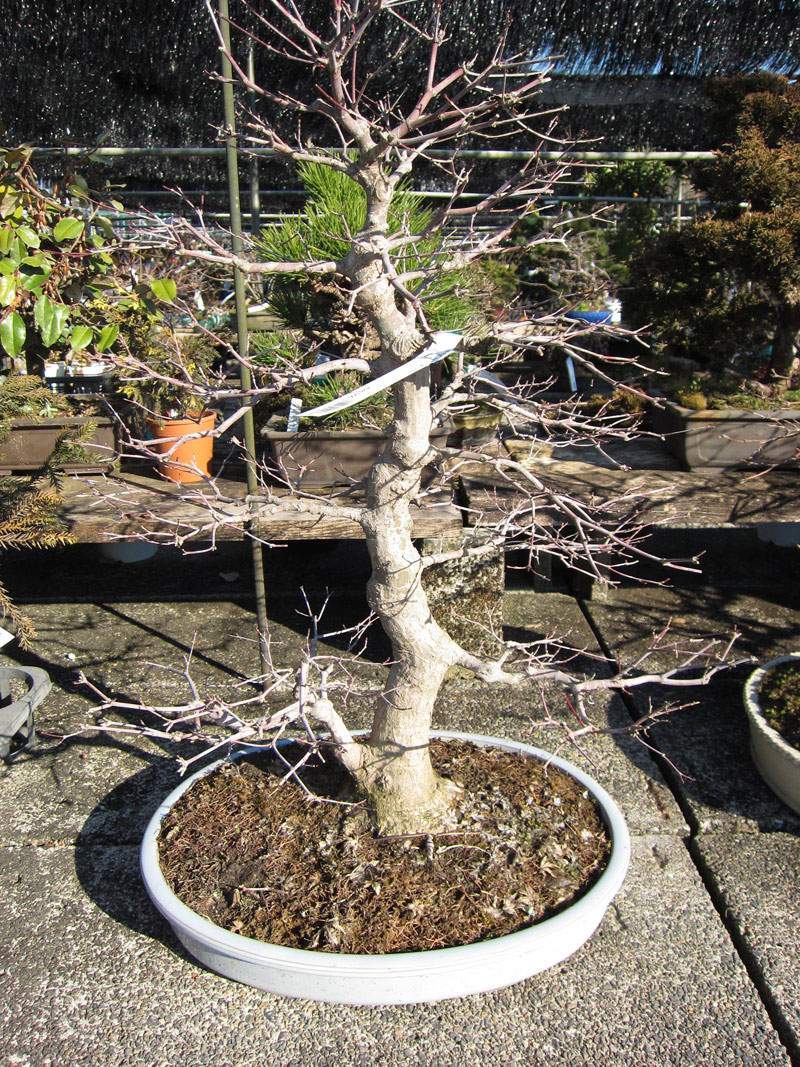
A modest maple that would have plenty of potential.

Kanuma garden centre is not going to be first on the list when it comes to a Japanese bonsai pilgrimage, and may not even make second, third or fourth place, but for someone who has seen all the big sights and wants a bit more insight into what is out there in Japan it is worth a look.

I finally got around to purchasing a domain for this blog.

You can now  find the blog much more easily.

www.nichigobonsai.com

If you have a bookmark or link to the old address, dont worry, you can still use it as both domains will direct you to this site.

It’s that time of the year again.

It’s a time of the year that I both look forward to and dread. Once you amass a certain number of pines you begin to realise just how much time you need to set aside to give each tree its seasonal maintenance. This year, I have moved house and as a result some of the trees I would have normally have worked on earlier in the month were left until now, so the back log of tasks compounded the time I needed to spend on them. That being said, once I began the work I really enjoyed getting to see  just how each tree had been growing over the season. When you thin needles you get to inspect very closely every branch of the tree and evaluate each new bud, needle and twig. You really get to know your trees while doing these tasks.

Why do you thin needles? You should thin needles at this time of year for a few reasons.

  • By removing last season needles you let more light and air into the canopy which in turn encourages back-budding.
  • By removing some of this seasons needles on strong areas you are able to balance strength across the tree foliage.
  • By removing surplus needles you also reduce the amount of places that insects and other pests are able to hide.

I like to think that needle reduction for pines works a little like defoliation does for deciduous trees. I figure that the pine realises it suddenly has less foliage and as a result sets new buds which will grow the following spring to replace the needles that you removed. As pines cannot simply grow new needles they have to throw new buds. Most of these new buds will be dormant buds back within the canopy. These are the buds you want. This back-budding is what will give you foliage to cut back to in the future and which will prevent branches becoming leggy.

This year I have left a few more pairs of needles then I usually may on some trees as I plan to re-pot them come spring and figure they could benefit from the extra strength more needles will provide.

A Formal upright Black Pine in the making. This image was taken prior to beginning needle thinning.

The same tree after thinning. It is still very much in developement but after a few years of work i hope to have a more complete looking tree.

This is another JBP from the same batch as the above pine. It has developed much better than the above pine. It avoided many of the mistakes the other tree had to endure as i was learning. Photo was taken before thinning.

The same tree after thinning. It needs the apex developed but otherwise is on the right track. I am also planning to graft a back branch or two into the upper section this spring which may be the topic of a future post.

I also thinned my large Radiata. I again left more needles on it that i usually might for two reasons. The first reason is because I will be re-potting it this spring and I want it to be strong. The second reason is because I am experimenting with leaving more foliage on it much like you would on a white pine. We will have to see how that works out.

A Radiata branch prior to thinning.

And the same foliage after a light thinning.

Things have been a bit slow of late on the blog as I am in the process of moving both offices at work and houses. The good news is the house I am moving into has a bigger backyard and the office is closer to home. Both these factors should make for more bonsai time.

That being said I have still been thinking about Radiatas.

I had received some information that some growers in the USA were classing the Monterey pine in its own 3 needle group along with Ponderosa pines. So, i started looking for information on Ponderosa care to see if the techniques would cross over.

I was looking for ponderosa information when i came across Ryan Neil’s website. (Have a look if you haven’t already). After seeing the amazing work he is doing on ponderosas I decided to send him an email seeing if he was willing to share his techniques. He was. An excerpt is below.

Ryan Neil wrote:To answer your question about ponderosas, I do a few things that seem to help. The main thing is to focus on increasing the number of needles on the tree. With ponderosas, much like white pine, they are only geared up to produce one flush of growth/year. As a result cutting buds or needles is not an option and so the energy of the tree must be distributed amongst a large number of needles in order to dilute the strength put into any single needle. On very old Monterey Pine the same is true. This means not plucking any old needles until the fall and always feeding and fertilizing well during the development stage so as to increase bud and needle count. On most trees I have years that are sacrificial of needle size in order to get budding and density, after which I am able to control needle length much easier. I fertilize heavy during these sacrifice years and care little about needle length. However, once a reasonable amount of needles are present, I will not fertilize my ponderosa until September and only give them small amounts in the fall so as to not overly increase their vigour. Again, this applies to trees that have the bud and needle density I’m after.

I was really impressed with Ryan’s generosity and eagerness to share information. He has already demonstrated that he has a lot to give to the bonsai community and i am sure he will help to raise the standard of western bonsai further.

He did mention that he would at some stage like to come out to Australia so fingers crossed for the future.

What do people think about using his ponderosa techniques on Radiatas? His techniques seem to make a lot of sense and from my own experiences i had found that they do not respond very well to black pine techniques so treating them more like a white may be the next step.

If you read my previous post Pinus Radiata (Monterey Pine) Techniques you are probably wondering how the progress is going. The answer is slowly but surely.

After asking all over the net, i have come to the conclusion that not a whole lot is known about growing this species as bonsai. Funnily enough the most information came from Australians. I am guessing that this is due to its wide availability in Australia and Australia’s lack of other dig-able pine species.

There are quite a few growers of this species here and quite a healthy debate was started on Ausbonsai and some very nice examples of Raditatas grown as bonsai were posted. There was also a lot of interesting information shared such as how easily they airlayered.

What has come out of this? Well I think it will be a bit of an ongoing project, ticking away in the background. I plan to document over the next 12 months the various changes in a couple of my trees as they grow in the hope that once I understand their growth habits a bit better I will be able to work out a timing for pruning and candle removal.

I will keep giving updates from time to time as I document them.

I will leave you with two images. Both images were taken on the same day, from different trees. One needed repotting and the other had been repotted this year. I think it is clear that one has neat needles while the other does not. This pair of images gives me hope i can get radiatas to consistently give short neat needles like those in the picture of the older tree.

A young tree

An older tree

Stay tuned.

Pinus radiata was first introduced into Australia in the early 1850’s but was not commercially planted in large numbers until the 1960’s.  Since their implementation as a commercial timber crop, Australia has planted around 740 000 ha of the pine.

In plantations, seed produced by the pines germinates readily and many seedling pines can be found around areas where plantations are present.  As Australia doesn’t have any true pines native to it, these plantation escapees are the closest thing to the yamadori pines of other countries that we have.  In fact, the radiata is such a vigorous grower and reproduces so easily that in many states it is declared an invasive noxious weed species.

Pinus radiata or ‘The Monterey Pine’ although prolific as a timber species around the world is not commonly used in global bonsai circles. This is perhaps because it is a little quirky when grown as bonsai.

They have a lot of traits that make them ideal for bonsai. Fantastic bark, vigorous growth, highly flexible and the availability of ‘wild’ stock to be dug up all add to their bonsai credentials.

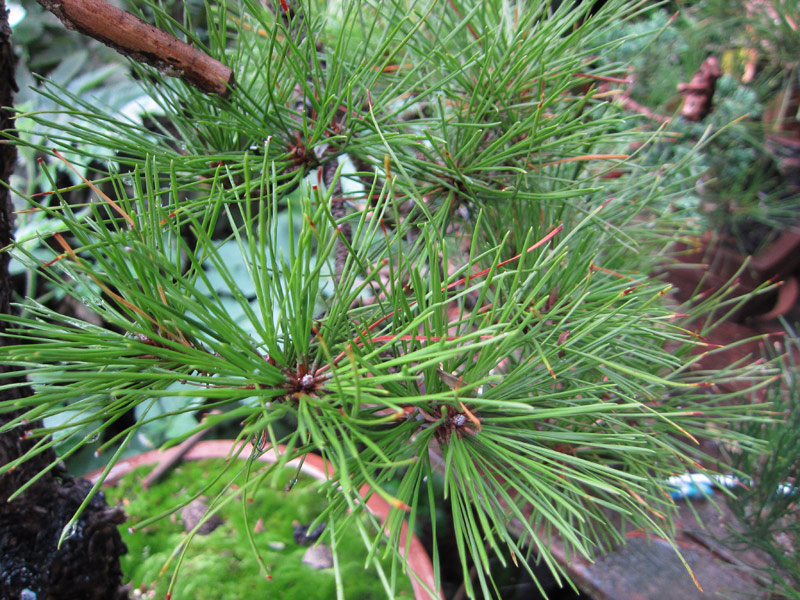
The needles of a mature Radiata bonsai

I have been growing a number of Radiatas and I am still yet to find the magic bullet for refining them.

Black pines seem difficult to grow until you understand their growth patterns and then prune, candle cut and needle thin at designated times of the year. The result of working within their growth habits produces neat and small needles and a large amount of back budding.

Radiatas I have not found as easy to master.

When I first started growing them I was told how easily they back budded and that you would have ‘almost too many buds’. This sounded too good to be true, and during the subsequent years of growing them I unfortunately found this to be the case.

The other problem I find with them is their needles. They can often be long, twisted and curled, but on some trees (one of mine being a key example) I have noticed shorter, neater and straight needles appear after the previous year’s unruly growth. This gives me hope that I may be able to work out a way to evenly force a neater shorter needle length by working with the tree’s growth cycles.

I have received a whole range of advice on taming this species. This has covered a whole range of often conflicting techniques, see below:

  • Treat them like a black pine
  • Treat them like a white pine
  • Pinch them constantly like a juniper
  • Wire one side completely, then later wire the other side
  • Pot them in an open mix
  • Pot them in a heavy mix
  • Break candles in half
  • Remove new growth totally

Over the next couple of posts I hope to generate some discussion with other growers that may dispel some myths and share successful techniques with the wider bonsai community. So if you know anything about Radiatas or grow them at home and are having similar problems please send me an email (Look under ‘contact me’ in the left side bar) or add a comment below.

To get people thinking I have included an old golden statements article to kick off the discussion that was written by Nancy Eaton on Mr Katsumi Kinoshita back in 1984. I used it as a starting point for my trees. Have a read and let me know what you think. Does the way you grow radiatas differ from those of Mr Kinoshita? I would love to hear about it. Next week I will begin to post about my experiences with the species and some of the things that have shown good results and others that have not been as successful.

Click to enlarge.

Click to enlarge.

Click to enlarge.

Click to enlarge.

I Just wanted to say that my thoughts are with the people of Japan tonight in the wake of this terrible disaster.

To all my friends in Japan, i hope you, your famlies and friends are all safe.

Enter your email address to subscribe to this blog and receive notifications of new posts by email.

Join 678 other subscribers

Contact me

nichigobonsai***gmail.com

Note: to use email address, substitute *** with @