It’s been a busy few weeks so I apologise for the lack of posts. Hopefully I can post a bit more regularly now.

This post I will share a few more photos from the Korean Bunjae Museum. You can see in my earlier post, some of the amazing man-made stones that were on the outside of the massive green houses in which the bonsai were sheltering from the sub-zero winter chill. In this post we will explore one of those green houses.

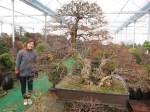
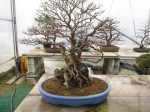
Inside the green house.

What was interesting about this nursery was how it was run. In the Japanese nurseries I have visited the trees that were living within the nursery either belonged to the nurseryman or a customer but nearly all the work was done on the trees by the professional nurseryman.

Here in the Korean Bunjae Museum, hobby growers could rent bench space and grow their trees as they liked while enjoying the luxuries of a nursery such as misted green houses, regular watering, and a professional grower on site to call on for advice and or lessons etc. It seemed like a really good system and one I could see working well at other places. To imagine the ease at which you could take holidays without having to organise someone to water or without having to move the collection to a friends backyard makes this nurseries system seem like a great idea.

Now just because the growers in this green house were hobby growers it didn’t mean the trees were of a sub standard level. In fact there was a whole range of standards of trees many of which were very high leveled.

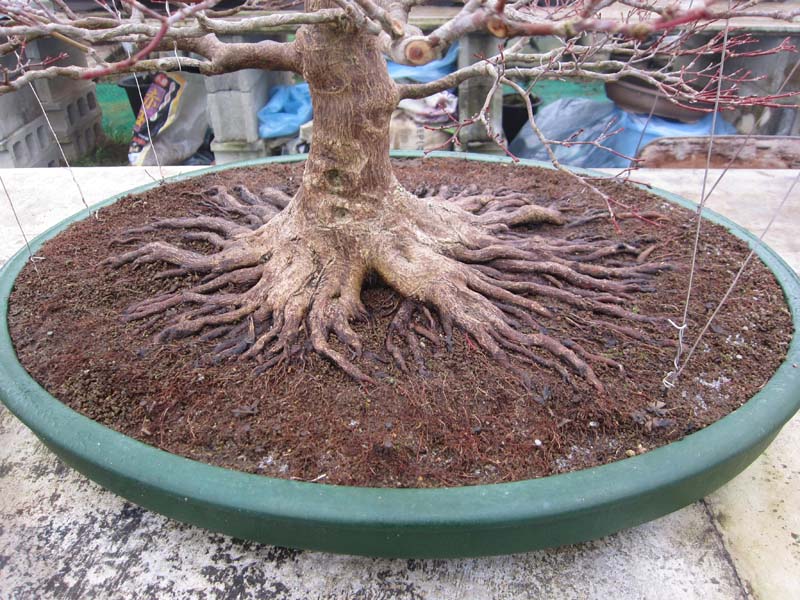
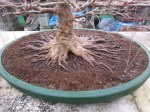
Some amazing Nebari!

The tree above was one of the first to catch my eye with its excellent root spread. I am sure that most of those roots will fuse into a solid plate at some stage but for now the individual roots look amazing!

Thee tree in the round.

And I guess I couldn’t make post about a Korean bonsai nursery without having a picture of a Korean Hornbeam.

A nice hornbeam.

A more feminine hornbeam.

There was also no shortage of junipers.

Juniper

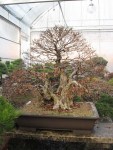
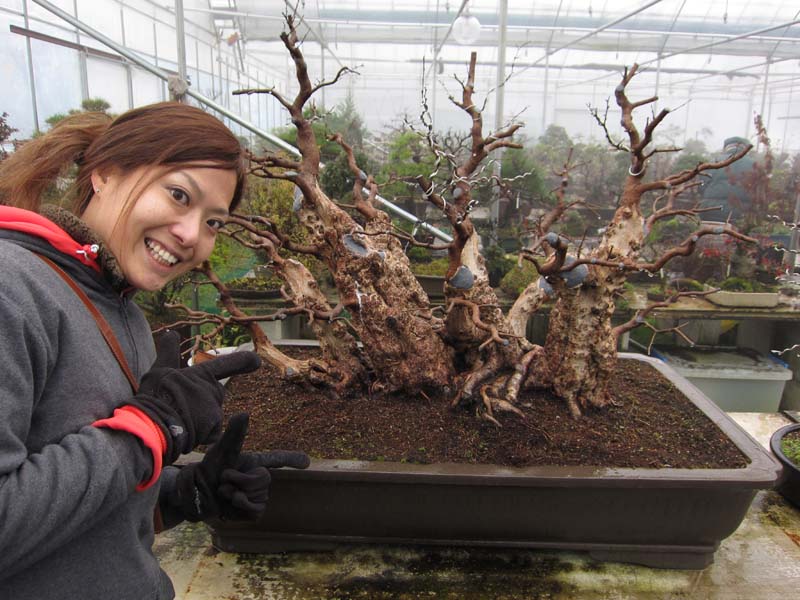
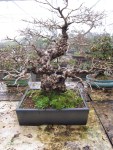
What was particularly interesting was all the raw material that was growing between the more finished bonsai.

My wife posing with a large hornbeam in-the-making

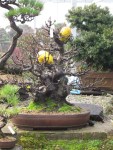
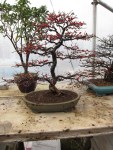
A trident maple (I think, maybe a korean maple of some type?) with a thread graft.

A few more pics and in the gallery below.

The next post will be on the second, larger green house which is where the Korean Bunjae Museum collection was sheltering out the winter. It was a huge space, packed with trees so stay tuned.

During our recent stay in Japan we managed to get a couple of cheap flight / accomodation packages so we could spend a few days in Seoul. The purpose of the trip was for my wife to stock up on Korean cosmetics  (Korea is a shopping mecca for the Japanese) but I managed to squeeze in a quick visit to one of the local nurseries, The Korean Bunjae Museum.

The Korean Bunjae Museum

This visit was my first experience with korean bonsai so I wasnt sure what to expect. What I will be covering in this post is what initially grabbed my attention.

We visited in the middle of winter. Most of the lakes in the surrounding parks had frozen and the top daytime temperatures were not even making it above freezing. When we first entered the nursery I wasn’t sure we were at the right place. I could hardly see any bonsai! We soon learnt that the whole collection was sheltering in huge greenhouses for the winter but that’s a whole other post.

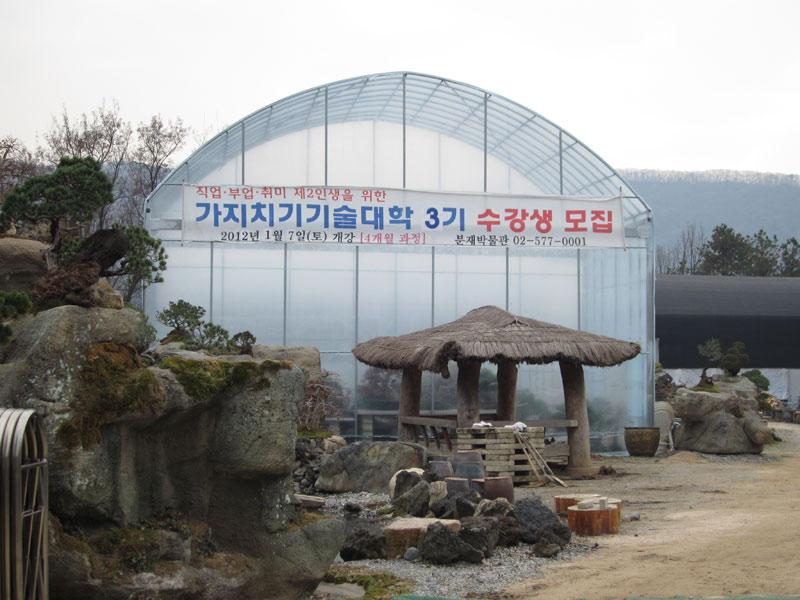
What caught my eye was some huge rocks with trees planted upon them that were assumingly too big to be moved inside for the winter.

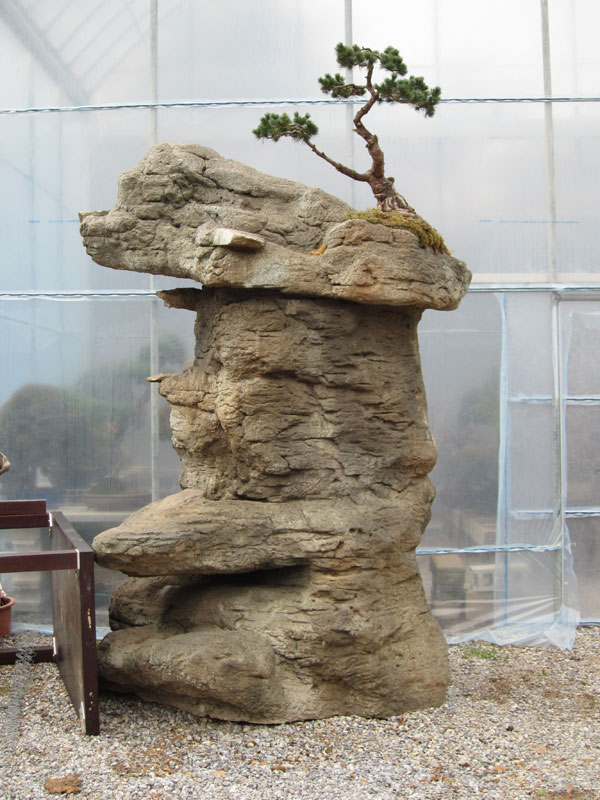
One of the massive rocks.

After spending some time with the owners daughter she explained that the rocks were actually all man-made by a close friend of her fathers. Now I don’t know about you but I think these are some of the best fake rocks I have ever seen! Even up close I couldn’t tell they were not natural.

Another rock and planting.

An upright rock with a small pine perched a top.

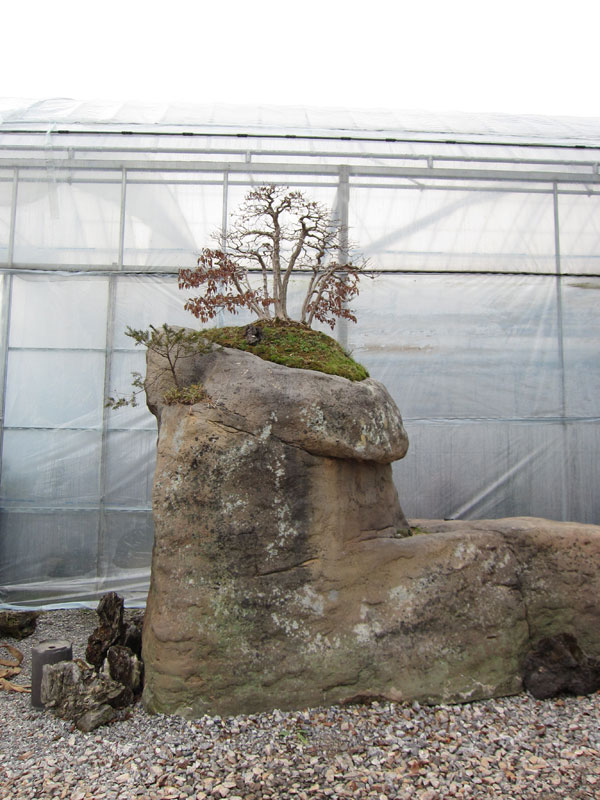
This last rock was my favorite. It was large rock that had a great little hornbeam forest on top of it. It made me wonder just how difficult it must be to trim it and keep it looking so good.
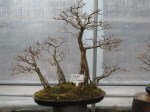
A small forest on top of one of the rocks.

A close up of the forest.

I will have a few more posts from this nursery as it was full of interesting trees and was run quite differently to the Japanese nurseries I was familiar with so stay tuned.

It is well worth a visit if you are ever in Korea. Their web page can be found HERE and their facebook page can be found HERE


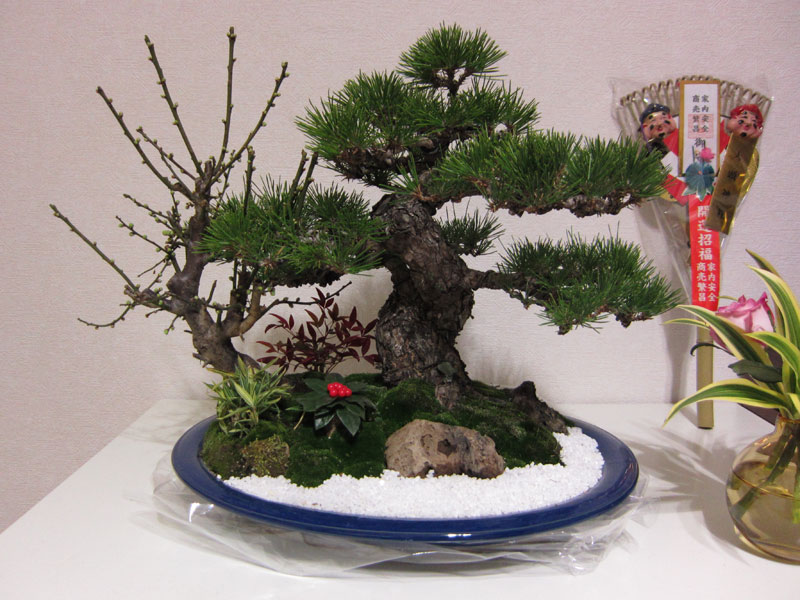
Shochikubai is a type of planting sold at New years time in Japan to bring good fortune for the coming year. The below example was one a friend had bought and was on display in their apartment when I visited.

Pine, Bamboo, Plum.

Shochikubai (松竹梅) is a chinese reading of the japanese kanji: matsu (pine), take (bamboo) and ume (plum). The pine represents strength, the bamboo longevity and the plum stands for beauty and optimism. Around the New year you would see these pop up at businesses, department stores and homes across Japan.

This is probably the closest Japan comes to ‘Mall-sai’, although I think that this pine has a lot more promise than any I have seen for sale in shopping centres here.

How long these plantings survive outside of the new year period is hard to say, my friend’s planting is still alive but I am not sure for how long. They don’t have a history of green thumbs and they live in a small apartment with a small balcony, not ideal bonsai conditions. Come to think of it, I don’t remember seeing any really established ones anywhere else which might suggest their survival rates are similar to the expected survival rates the mall-sai we get here.
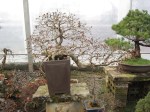
No matter what the future holds for these plantings, I think that any year starting with a black pine bonsai is going to be a good one!

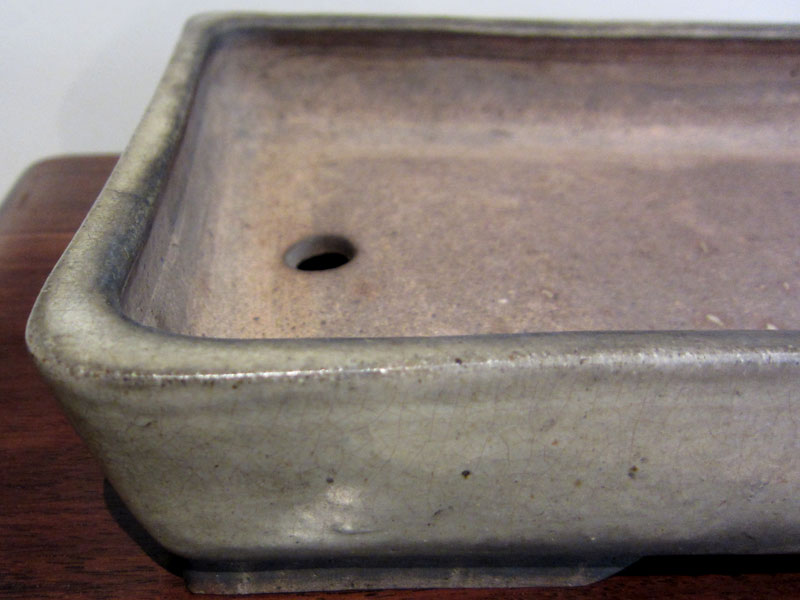
Below is a pot I picked up from Mr. Tanaka at Aichi-en in Nagoya. It is an antique pot and I think it is from the Nakawatari or middle crossing period.
I am by no means an expert on antique chinese pots (this is my first) but from what I have been explained Chinese antique pots are roughly divided into 3 categories. Huruwatari, Shinwatari, and Nakawatari. These correspond to periods of wars between Japan and China during which time many pots and other goods made their way to Japan.

Beautiful patina.

Ever since seeing the antique Chinese and Japanese bonsai pots in the  Kokufu exhibition catalogues I had wanted to own one. I was especially drawn to the white or cream containers that have become in some cases almost black from the layer upon layer of patina that builds up on them.

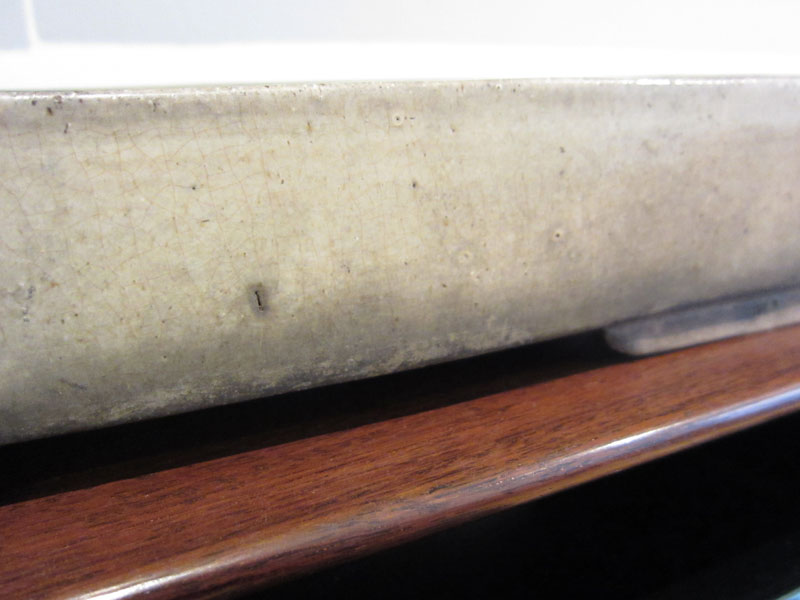
You can see the imperfect warped edges.

When I was pot shopping this last trip I had a rough list of pots that I was interested in buying. I had also made a deal with myself that I would buy usable sizes instead of falling in love with pots that would only ever be mantle piece ornaments like some of my previous purchases.

While visiting Aichi-en, Peter Tea and I searched the nursery for a pot that might fit my needs. We came up empty-handed after a 30 minute search. Peter then asked Mr. Tanaka if there was anything that might suit and he headed out to the piles of pots we had just searched only to return a minute later with the perfect pot in his hand.

A detail fo the glaze, patina and surface inperfections.

The pot I ended up buying was a good size for the bonsai I like to grow. I guess it would fit trees in the Chuhin range. Also being of this grey/ white colour I think it will go well with a range of different deciduous species.

The pot itself is full of imperfections and it is a little wonky. If you look along any one side you will notice that they are slightly off square and or bowed. I really like this. In most of the high-end Japanese pots the geometries are perfect so it is nice to own a pot that has some rustic character to it. I am very happy to own this pot and I hope to give it some use in the near future.

If anyone knows more than my basic understanding of Chinese antique pots or would like to make any corrections to my description please post in the comments. I am interested in learning more about these pots and the times that they came from so please comment if you know any more.

One of the things that surprised me in Japan was the apparent lack of theft. Now I am sure things do ‘walk’ from time to time but for the most part I never really saw any signs that theft was much of a problem.

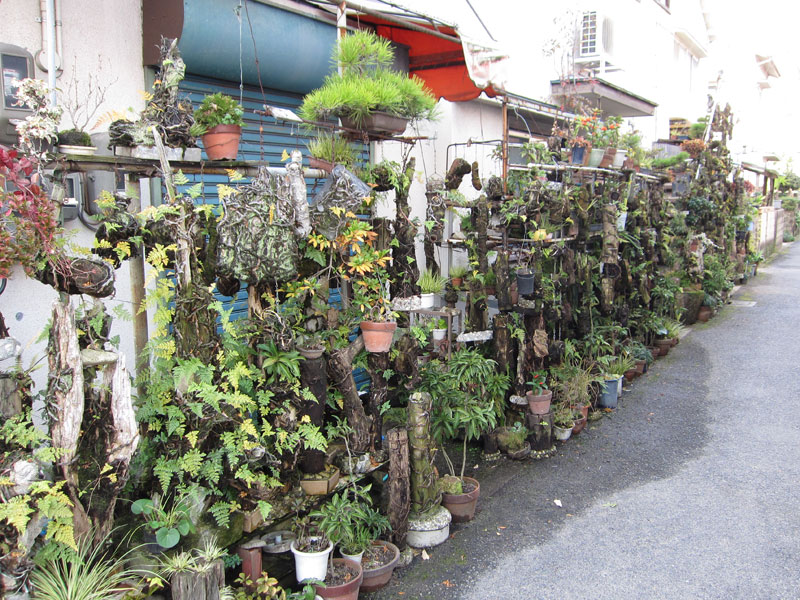
I really loved discovering bonsai in plain view of the street on the walks I took around neighbourhoods of the various cities I visited.

Someones collection visible from the street.

Now I don’t know what the rest of the western world is like, but I am pretty sure that if I had my collection on display like this outside my house it would have been stolen within minutes of putting it there. Now Australia is not full of theives but we seem to have a much bigger problem with theft than what i could tell Japan has.

Someones collection of plants (including bonsai) occupying the space between their house and a public laneway.

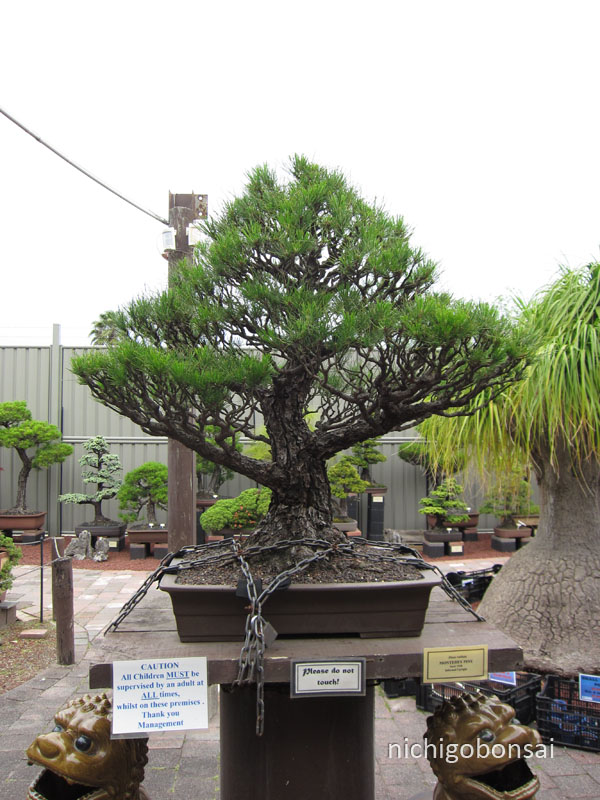
Why is this? In the case of bonsai nurseries in Japan they rarely have more security than a low fence or wall to stop the theft of some very expensive trees. In Australia on the other hand one particular nursery has 3 meter high walls with barbed wire, cameras, security lights and they still have to chain down the expensive trees to prevent theft.

Bonsai in an Australian nursery.

And this seems to be the norm for nurseries in Australia. Steel cages, chains, electric fences, alarms and dogs are all common in Australian nurseries and yet are virtually non-existent in their Japanese counterparts.

I would love to be able to stroll the streets of Australian neighbourhoods and discover front yards full of bonsai like you might see in Japan. Perhaps you might meet the owners as they were watering or pruning and ask some advice while leaning on their front fence. This might be a bit of an idealised view but it is always nice to dream.

Sadly I don’t see this happening any time soon, as most people understandably keep their collections a secret and only invite a very small number of people into their gardens the fear that they may get knocked off one day. I feel that this really locks up (pun intended) both trees and knowledge to those few that are privileged enough to be allowed into growers gardens.

Sure at clubs and local shows you get to see some of people’s trees but it is often the works in progress at the back of these people’s gardens that are the really interesting material. It is often these works in progress that you can really learn from yet they often never see the light of day.

Are other countries like this? Surely these problems extend beyond Australian shores?

I often hear the term ‘Cookie cutter’ thrown around from time to time when people are talking about Japanese bonsai. For those not familiar with the term, I believe it relates to people suggesting that certain bonsai seem to come from the same mould and or ‘cookie cutter’ which produces similar or same bonsai. Personally i think that the term often is applied by those who havent really got a good understanding of what is actually out there in Japanese gardens and nurseries.

Now there are a lot of mass-produced bonsai in Japan that are grown to a rough formula but these trees are not a good representation of bonsai in Japan as a whole. On the other hand there are a lot of trees that can seem similar at first glance on benches in nurseries throughout Japan but closer inspection reveals quite dramatic differences.

Cookie Cutter?

What was one of the biggest surprises to me when I first visited japan was the huge amount of irregular styles and forms of trees that by no means could be classified as what some people dismiss as ‘cookie cutter’. In fact most of the nurseries I have visited were full of unusual and or ‘different’ bonsai. I know that when you look through various exhibition books you see some unusual trees, but its only when visiting the nurseries that you actually get a clear idea of just how many irregular bonsai are being grown.

During my last trip i met with Peter Tea at Aichi-en and he explained what his Oyakata Mr. Tanaka had explained to him about unusual trees.

He said that unusual bonsai would always be worth less than ‘standard or correct’ trees during the developement stages. Once the trees reached exhibition standard however, the unusual tree would suddenly become much more valuable. There are many correct bonsai in Japan and most nurseries could sell you one. Unusual trees on the other hand are one offs and if a customer wants to buy one they must pay accordingly as they cannot simply go next door to get something similar.

Strangely we don’t get to see many of these types of trees in western magazines or literature instead these forms are associated with European and American yamadori. I was certainly surprised to see so many when I first travelled to Japan. Now I find that they are the trees that I gravitate towards when I arrive at a nursery.

Below are a few interesting trees that i saw during my travels that didn’t fit the mould (some of them look like they totally broke the mould!) I hope you enjoy them as much as I do.

Dramatic movement.

A close-up of the twisted movement.

A very angular exposed root style.

I wonder if this tree was grown or collected?

Black pines shouldn’t have shari? Well this one does.

I think you will agree that it works very well in this case.

Unusual?

A very non-conforming Nebari for a non-conforming tree.

Read more about this strange trident HERE.

Bunjin, Semi-cascade or a combination?

Interesting.

I like to look at trees such as the above and think about what they must have looked like pre-styling. Material such as this requires a high level of creativity to style into a well-balanced image and often results in trees that really stick in your head. I know that it is these types of trees that I always spend the most time in front of.

So next time you are out and about evaluating future material keep an eye out for the unusual, you never know, you might get yourself a bargain!

Well, re-potting season is a while off here in Australia but while I was in Japan I did spot something that might speed up the whole process when the time does come around.

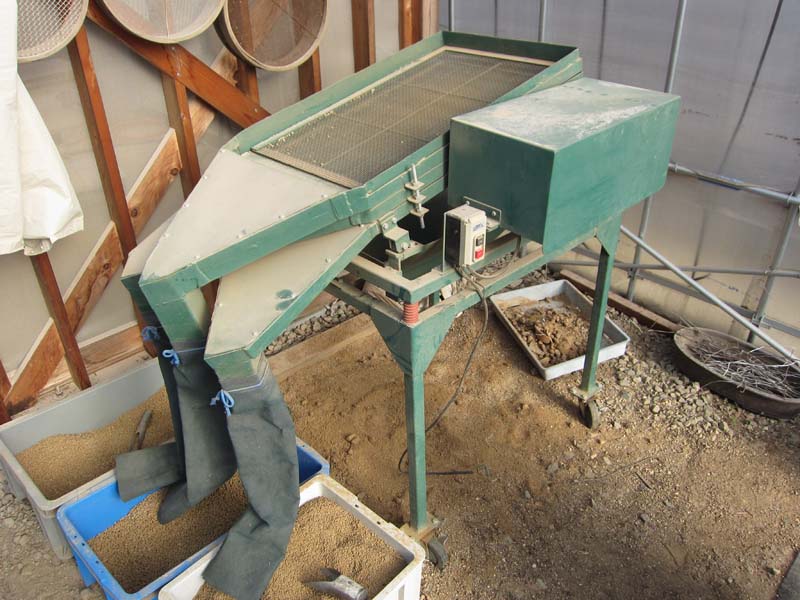
In one of the green houses at the back of Taisho-en I spotted a sifting machine.

I want one!

I have a small hand sifting set at home which takes me ages to sift enough material to do a hand full of trees. I am sure with a machine like this I could do the whole collections worth of soil in no-time!

From what I could tell it was a simple contraption with 3 sizes of mesh screens that gently shook to give you 3 graded sizes of soil and the unwanted dust simply fell through to the floor.

It might be a good machine for someone who doesn’t have a team of apprentices to do the sifting for them!


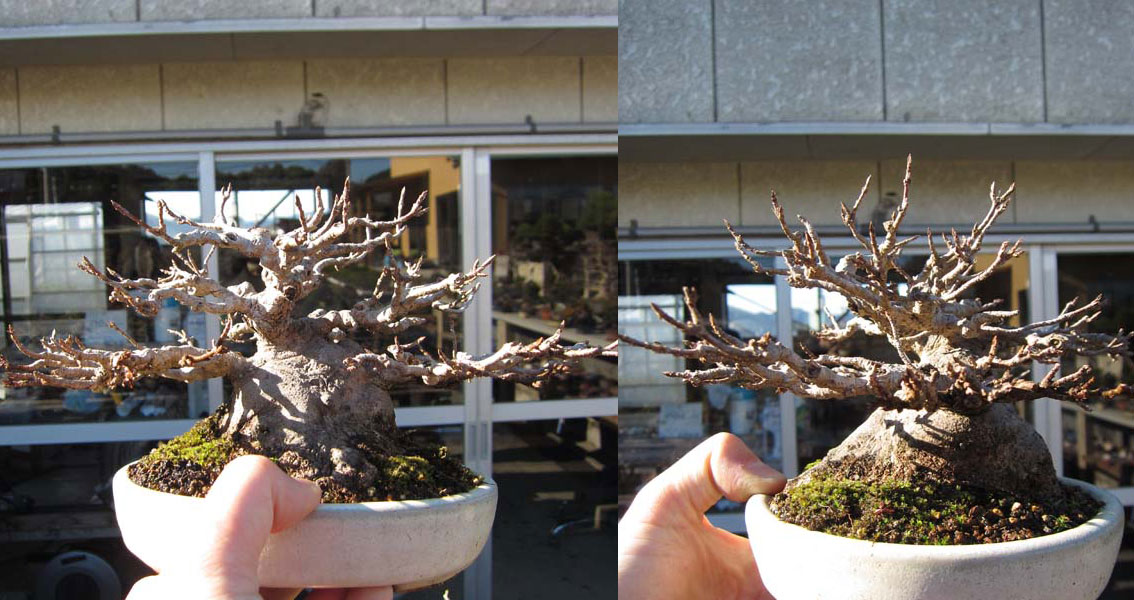
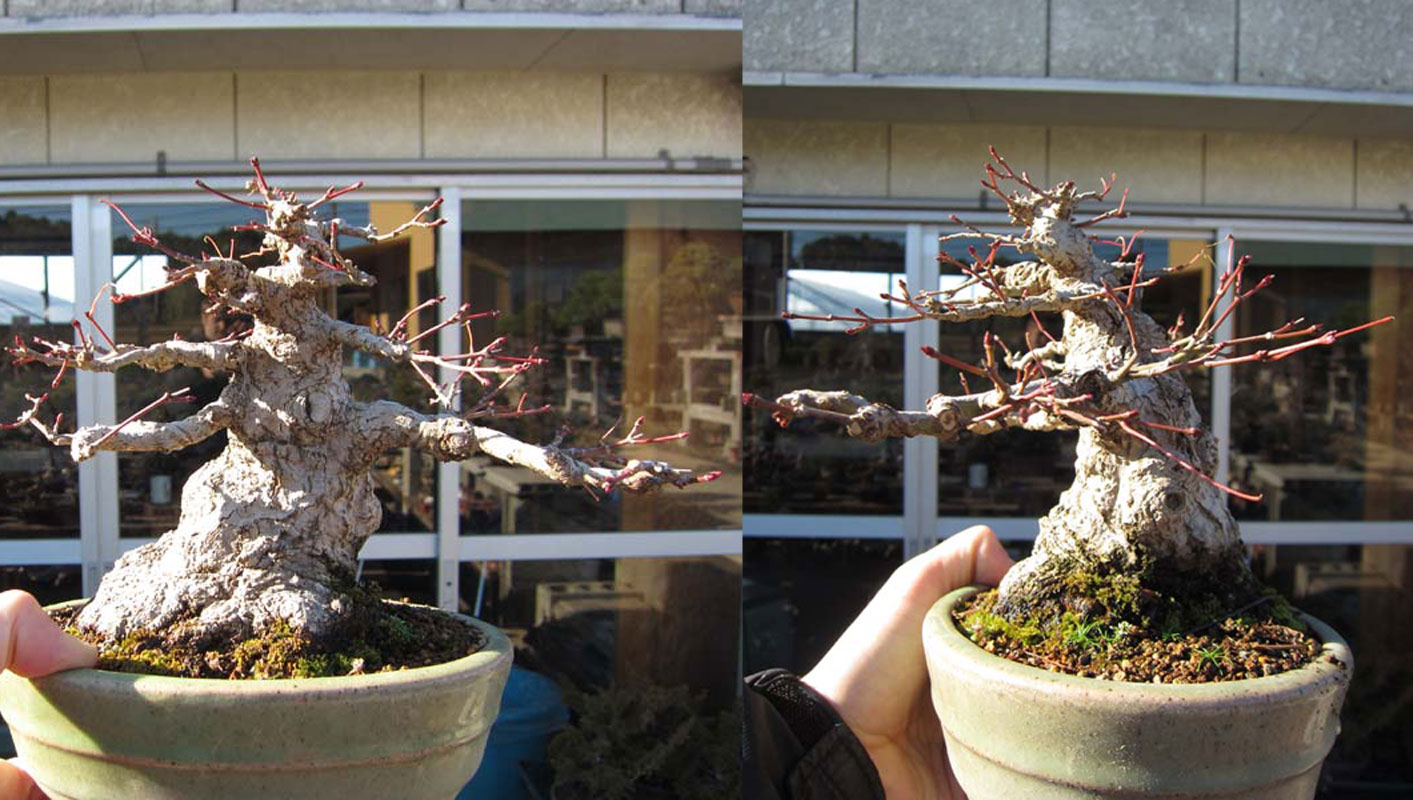
Before I left for Japan a friend (who runs an interesting blog) asked me to take some pictures of bonsai from the side so he could get a good idea of how the trunk lines and apex were constructed.

He has begun growing some stock in the ground and was keen to see how the japanese constructed their trunks. So as I was snapping pics I sometimes remembered to take a few shots from different angles to show a more 3d view of the trunks.

He asked I photograph a wide range of trunks but I realised that the deciduous trees were the only ones that you could easily see the trunk movement and structure so those were what I focused on.

(Left image: front, Right image: Side view)

A medium-sized root over rock Trident maple.

Shohin Trident Maple

Another shohin Trident Maple

A shohin Japanese Maple

Looking back at the photos it is interesting to see just how far forward some of the apexes are. I guess this allows you to get a much more compact apex with many branches. If you imagine standing these apexes up you can picture that it would raise the height of the tree and also spread out the ramification in the top section creating a taller less dense image.

Looking over my own trees at home over the weekend I think that some of them could become more compact and dense from a simple tilting forward of their upper structure. It was a good exercise taking these pictures as I had seen hundreds if not thousands of trees over the years but have never really focused on this one detail. I think I will have to look over all my other photos and pick out individual styling details and see what they reveal.

On the last day of our recent Japan trip we managed to make a last-minute stop in at Gafu-ten while on the way to the airport at Kansai.

Gafu-ten is held in early January at the Miyako-messe building in Kyoto, Japan. The exhibit showcases some of the best shohin bonsai in Japan and the sales area attached to the exhibition has equally impressive shohin related trees, pots and goods.

This is my second time visiting Gafu-ten. I was at the exhibition last year (See HERE) and after seeing the trees on display and those for sale i was keen to get back.

This years show lived up to expectations with many high quality displays (unfortunately photos were prohibited).

A bonsai for sale at Gafu-ten.

In Japanese exhibition you can only exhibit individual trees once every 4 years. That means that every year you are guaranteed to see different trees. This years mix of bonsai had quite a different feel to those of last year with some quite unusual stylings exhibited. As we couldn’t take photos of the exhibition those wishing to see the trees might like to purchase a copy of the exhibition album.

We had a great time filtering our way through the displays and then moved into the sales area.

Some of the offerings.

For those of you that havent been to a sales area in a japanese show let me try to explain it. It is like walking into bonsai heaven. Trees, pots, stands, suiseki, tools, books, and almost anything else bonsai related you can think of can be found in the sales areas. Gafu-ten’s sales area is almost the same size as the exhibition and from the look of the people shopping there it gets the same if not more attention than the show itself.

Shoseki pots for sale.

We spent a good amount of time catching up with some vendors we knew, shopping and dreaming of trees we’d like to take home before we finally had to head off to catch our flight at Kansai.

For those interested, the full collection of photos can be found HERE.

I’m Back. We had a very busy 4.5 weeks away. Apart from the family and friend catch-ups, weddings and birthdays I did manage to see my share of bonsai. As I sort my photos I will share some of the sights and interesting bonsai that I came across in the coming weeks.

In the mean time I thought i would share a picture of a fairly amazing shimpaku I found by accident. Some friends took me to a local bonsai nursery where we stumbled across the below tree.

I am not sure if the pot will fit it or not but even though it is cracked it’s the best we could find.

Shimpaku and pot

It is a little hard to gauge the scale of this tree so below is another pic with someone along side it for scale comparison.

Size comparison.

This nursery actually had a couple of exceptional garden junipers which may have to make it into future posts as like the above tree, they were too big to make it into my suitcase.

Enter your email address to subscribe to this blog and receive notifications of new posts by email.

Join 678 other subscribers

Contact me

nichigobonsai***gmail.com

Note: to use email address, substitute *** with @