You are currently browsing the category archive for the ‘Uncategorized’ category.
A few weeks ago i was incredibly lucky to be the Artist in Residence at the NBPCA.
The NBPCA is part of the larger National Arboretum (https://www.nationalarboretum.act.gov.au/) located in the heart of Canberra. The larger Arboretum is a great day out for any tree lover with 100 forests planted across the site amongst a scattering of lookouts, walks, a killer playground and a restaurant / cafe with view that’s hard to beat!

Terrible photography on my behalf: Part of the view the collection looks out across with a constant stream of people enjoying the collection and larger Arboretum site. The view is much more panoramic but the above gives you a taste. Get up there and experience it for yourself!
Within the Arboretum, the Bonsai and Penjing collection itself commands impressive views over the city, with the views of the bonsai inside it’s walls also pretty impressive.
With a mix of permanent collection bonsai and loan trees there is always something interesting on display to see with the trees changing with the swap over of loan trees on a regular enough basis to make re-visiting the facility each time fresh and enjoyable. In fact, at the moment I have 3 trees on loan and on display adding some fresh faces (fresh trunks perhaps) to the smaller trees in the collection. If you haven’t been, and you’re into bonsai or trees more broadly, i would thoroughly recommend a visit!
It had been a number of years since i had been to the collection proper, and it was great that i got to catch up and Spend time with both curator Leigh Taafe and assistant curator Sam Thompson. Leigh i have know for many years but it was really good to get an opportunity to hang out together, reacquaint ourselves and talk all things bonsai. It had been a long time between chats!
Sam on the other hand, i had met on some previous occasions but it had only been in very small, passing hello’s at conventions and the like, so it was really nice to spend some time together and get to know him better.
Sam and I spent the first day of my stay working together and discussing a whole range of things from pottery obsessions to the day to day challenges and methods of running a collection such as the NBPCA.
As for what my role there was, the Artist in Residence program is predominantly a knowledge sharing exercise with a range of different bonsai practitioners from around the country being given the opportunity to share ideas, techniques and skills with the collection and it’s volunteers. On the flip side it provides a great experience for those outside of Canberra to have some involvement in what is a the jewel in the crown of the Australian bonsai community and be exposed to trees from around the country and the inner workings of a high end public collection.
Another part of my time at the collection was working on some trees. The trees were provided with the aim that they will likely be used as part of the annual fundraising for the collection, with raised monies going back into the collection, it’s trees and it’s ongoing operations. A nice thing to be able to contribute back to.
The first tree I worked was a large Trident Maple that I was able to slowly style over the course of the first day, all while chatting to a few of the Volunteers and Sam.
As a bit of a side note, I didn’t take many pics but luckily Sam and Mike (from the Friends of the Arboretum group) took and kindly sent me a few which are below.

Above: Before

Above: After, (with me for scale.)
I was pretty happy with how this one turned out. Being a trident, there is only so much bending you can get out of thick branches, so the existing structure dictated many of the styling decisions. Via slowly editing the branching and wiring what was left I think you will agree that we were left with what looks like wild and mature deciduous tree. I think this one will have a bright future as further ramification is built upon the branches we set.
As part of the knowledge sharing side of things i also prepared a presentation on refining, or more so maintaining refined trees. The Arboretum is a little unusual in that all the trees it has or likely will receive for their display are already in a refined state and so maintaining that refinement is an important skill-set over those skills used to take a tree from say a developed structure into that state of refinement. I think it was well received.
I also conducted a demonstration on styling and how i go about taking stock through its first styling into a bonsai.
I was really happy with the material i was presented with as i have been playing with a lot of similar trees in my own collection lately.

The tree itself was a procumbens Juniper and had some wild and unusual movement, including a loop the loop feature. I began by removing unnecessary branching and making shari that highlighted the movement of the trunk-line.

The aim was to compact the foliage around the movement in the trunk to really play this up as the hero of the composition.
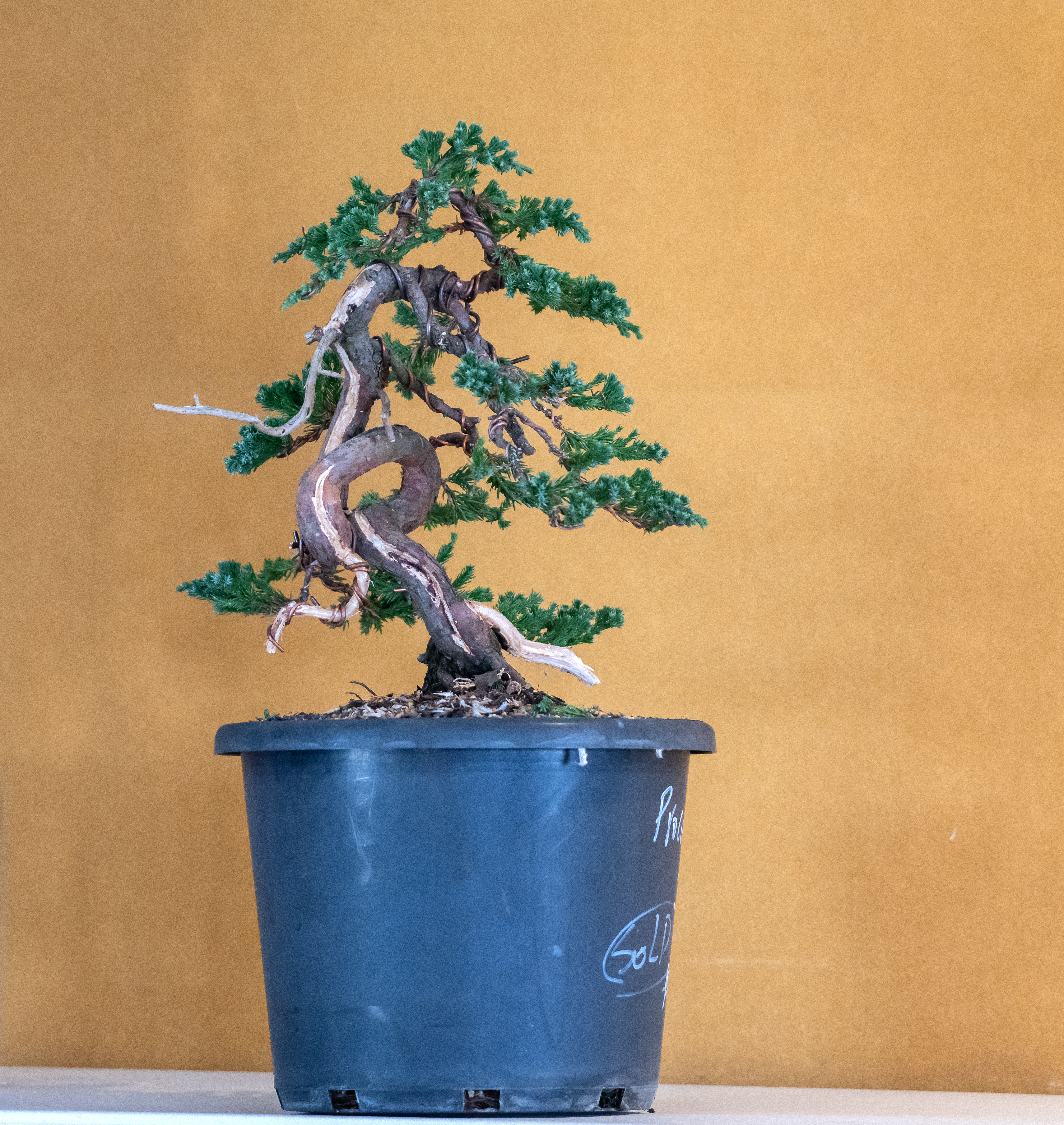
With the completion of the demonstration the structure or the future bonsai was set. I was really happy with how the tree turned out and think that it has a bright future ahead of it once the foliage fills out a little (which will happen quickly on a procumbens) and it gets a suitable pot.
And with that my time was done and i was back on my way home.
All in all i really enjoyed my time as Artist in residence. It was really nice to have some involvement in a collection that is essentially owned by the wider Australian bonsai community.
I cannot recommend enough getting up there for a visit and if you would like to be involved in some way I am sure Leigh would be more than happy to talk about Volunteering, Donating, Loaning trees or being otherwise involved.
As a final though, I’d like to extend a thank you to Leigh and Sam for so graciously hosting me and to all the Volunteers i met who were also very welcoming and accommodating. I hope i can get back up there at some stage soon for another visit.
With some down time over the Christmas holidays, I finally got around to re-styling THIS TREE. It had been growing mostly untouched for a couple of years and had well and truly outgrown its former style.

As it had been left to grow a lot of the growth had become leggy and a lack of routine thinning had left fewer amounts of interior growth than i would have liked.
To get started, I began by pruning. I thinned and removed heavy and unneeded branching, upward and downward growing sub branches, thinned the foliage and generally cleaned up the structure.

As I worked I also started to play around with new front angles and didn’t mind it from a slightly counter clockwise rotated position.

I began to wire as I pruned so i could get a better sense of what branches I needed and what could be cut off. All was going well until i made an error. I wasn’t paying enough attention and when I cut off one of the branches in the top of the tree it was difficult to see from my angle that there were two branches in the branch cutters jaws…….. and as a result, i cut the key branch on the right side off.


Well, what was done was done so I continued wiring and worked a front that was much closer to the original. I was pretty annoyed with myself but there wasn’t a whole lot I could do. All in all everything was not lost but i was kicking myself for making such an avoidable mistake.

The ‘finished’ result is a good place to be for now. The styling is pretty sparse due to how much foliage and branching i removed but the trunk and deadwood are now very much more prominent.

You can probably see that the wiring I applied is only on major branches and sub branches. As this is a restyling, I will need to develop the foliage over the next 12 months or so to fill in and tighten up to this new style, so I didn’t bother fine wiring and hence the slightly scrappy appearance.

As the canopy fills in i think i will further fine tune the front. As you can see from the above image that original front is not bad but i still think i prefer the one i ended up with that is slightly rotated anticlockwise. We will see if this changes as i grow some of the branches and get some more width to things (something that i wouldn’t have to wait for if i hadn’t cut off that key branch!)
It is interesting comparing this and my other small Kishu to the itoigawa i have. It is certainly more difficult keeping these kishu small and compact compared to the itoigawa. That said, the branching stays much finer on these so i guess you have to take the good with the bad.
Next post might be an update on one of my itoigawa trees…. we will see.
Just a quick update on this tree.
I spent an evening candle cutting the new years growth with the future shape of the canopy in mine, leaving shoots i wanted to extend uncut and trimming back to leave a short section of new growth on areas i didn’t want to extend too much.
Its a bit of a fun process as you are constantly thinking to the future of the tree, what needs filling in, what needs lengthening etc, while at the same time reigning in the new season’s somewhat messy growth. I did wire a couple of branches thinking i could get away with just adjusting a couple of things but as is always the way it just highlighted further things that need adjusting…… likely meaning i need to fully re-wire at some stage.
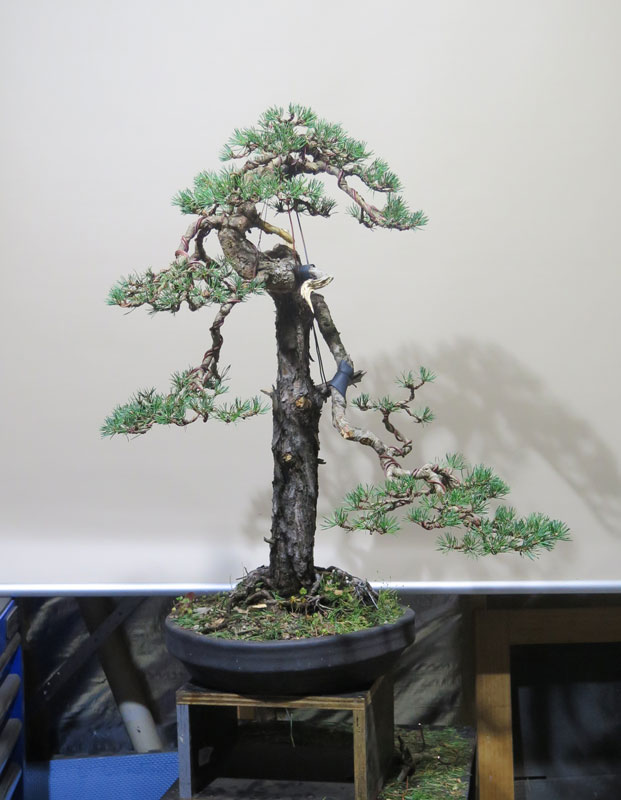
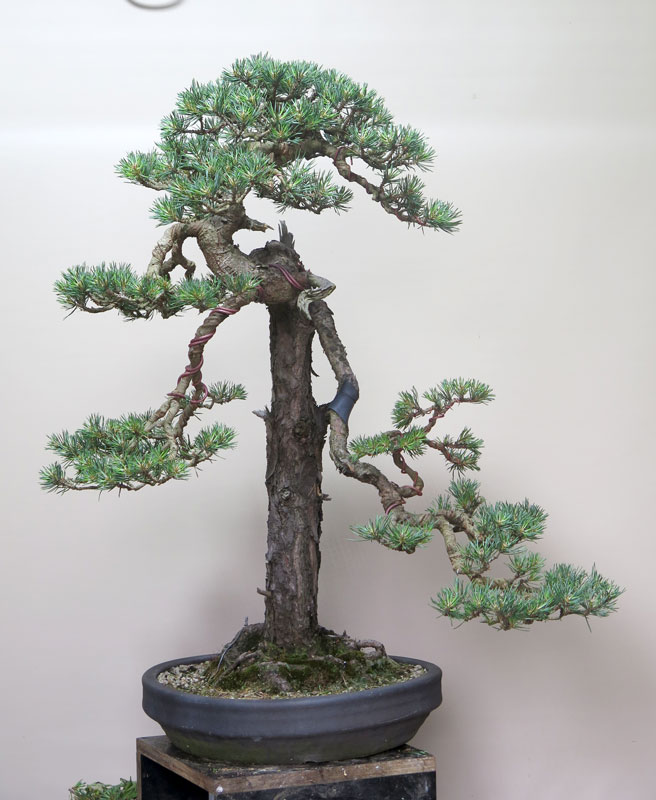
Above: 2021 on the left, 2023 on the right.
Yet another one to add to the ‘needs to be wired list’. This tree has a long way to go but is slowly filling in and improving each time I work it. It’s a strange tree for sure but i think that’s why i often catch myself gazing at it on my benches. I like the weird.
As far as future plans, i think the below badly done photoshop is along the lines of where I’d like to head. That said knowing how i do things, i very likely will change my mind along the way. We will have to see at the next update………..

A few days ago Mr. Nobuichi Urushibata passed away.
I met Mr. Urushibata back in 2007 when I first came to his nursery to study. I arrived in Japan with little to no language and managed to negotiate myself to Taisho-en.
My first interaction with Oyakata (A word that means something along the lines of teacher, mentor, guardian in Japanese) was a chat where he warned me in broken english with a stern face that my time at the nursery would not be a holiday and I would need to be “like samurai”. He maintained the stern face for a few moments then broke out in laughter.
From that point forward I learned about how kind, caring and passionate he was. Over many visits and much time he guided me through my bonsai learning and provided me with much life advice.
At a base level I was always blown away with his child like enthusiasm for bonsai, whether that was finding new trees and stock, styling or just generally carrying out maintenance. He always carried out his teaching with a smile and could see the humorous side of things when they went wrong.
I would see him out in the garden in the early morning, just walking around looking at trees before others arrived to begin work. I never got the sense that he was working a job but rather following a passion and it was inspiring to watch.


I feel very lucky to have met him and spent time learning under his guidance. I owe so much to him from what I have learnt and I feel that he played a large role in shaping me into the person I am today.
I will miss him a lot but I carry with me many fond memories of our time together.
Rest in peace Oyakata.
I have been doing a lot of thinking about bonsai lately. What it is, why we do it and how it relates to modern lives outside of a Japanese context.
While discussing this with my good friend Natasha Morgan, she invited me to run a couple of bonsai workshops of a different kind at her beautiful property, Oak and Monkey Puzzle in Spargo Creek near Daylesford to begin a wider discussion.

One of the trees at Oak and Monkey Puzzle
The day long workshops will be aimed at teaching people to see and interpret the world through bonsai as an artistic medium rather than via a set of rigid rules. It will guide you through the process of reflecting on how we see the world, how we might become comfortable within this and how we might communicate this to others; An awakening through bonsai if you like which can and will be applied widely outside of bonsai.
Recently featured in Country Style magazine, her property, skirted by forest, will provide the perfect backdrop for learning and sharing ideas.
Another highlight of collaborating with Natasha is that the workshop will be teamed up with a beautiful 2 course kitchen garden lunch cooked from locally sourced, grown and foraged ingredients set in her stunning garden. Natasha is an incredibly passionate, talented and welcoming host who is sure to make the day a very special one.
Further details can be found at her site: http://www.natashamorgan.com.au/
Be sure to have a look over what else she has been up to while you are there as she is passionate about people, collaboration, food and sharing ideas and skills and brings these all together in such a beautiful way.
I Just wanted to say that my thoughts are with the people of Japan tonight in the wake of this terrible disaster.
To all my friends in Japan, i hope you, your famlies and friends are all safe.
 Nichigo Bonsai